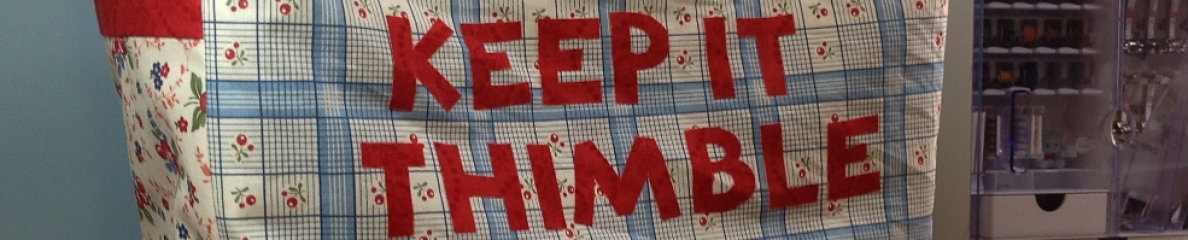

Sewing gadgets can make life easier, and if they are the right price, I am happy to try them out. Some of these things include a bobbin winder (used twice), a 1/4″ rule for marking seams (used a lot!), and the Dritz EZ Hem (used once for this dress). As you can see, even when you have the right tool for the job, you may not find that it is a must-have (just a fun to have). However, there are 5 sewing tools I can’t live without.
1. Seam Ripper
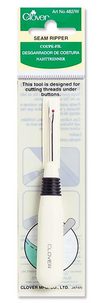
This gets used all the time! I used to get frustrated whenever I had to rip out a seam, but now I find it kind of therapeutic. Seam ripping is a nice break during a marathon sewing session. Also, once I learned the correct way to rip out a seam, the job was much faster and easier. There are two seam rippers I recommend (having used both quite a bit): the ergonomic once by Clover and the Dritz one that folds (which is nice for travel). The main thing is to pick a seam ripper you can easily hold in your hand without it cramping up.
2. Iron
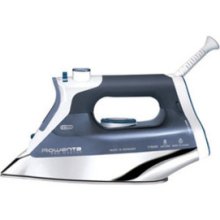
An iron is on this list, even though it is probably not considered a sewing notion, but it is a necessity. There are wide variety of opinions on which one is best. Many people swear by their $20 iron, while others say that the more expensive irons are worth the money. I’ve had experience with both types and I find the more expensive irons (like a Rowenta) really do work better for quilting and sewing. This is because of several reasons — and if you can find a cheaper iron that has the following features, get it:
The first thing to consider is the weight of the iron, a big heavy iron is going to work better since the natural weight of the iron makes it easier for you to press down and get a nice flat seam. Some people find that an iron can be too heavy and thus tire out their arms, so keep this in mind. The temperature is another factor in how well your iron works – you want a iron that can get nice and hot, especially when working with cotton – the hotter the iron, the flatter the seam. The final thing to consider is steam – more expensive irons have more holes for the steam to escape, which makes better use of the steam. One caveat is that if you store your iron with water inside, it is more likely to leak. I have heard that keeping water in the iron is the biggest reason why irons start leaking and break down. Each time I finish with my iron, I empty out the water, and I also run the self cleaning function a few times a month.
3. Scissors
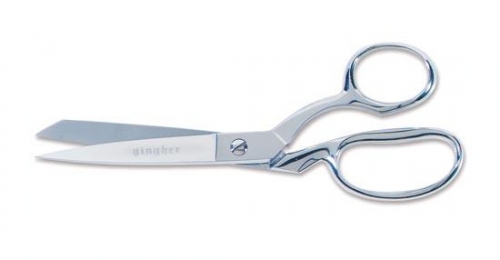
Again, this is an area where you can spend a little or lot of money. After comparing scissors, I splurged and bought Ginghers (made in the USA!) –8″ dressmakers shears for cutting fabric, 7″ craft scissors for ribbon, wool, and foundation piecing, and a 4″ utility pair for embroidery and applique (also good for travel). There are several reasons that Ginghers are worth the money. First, they accurately cut all the way to the very tip of the blade. This is especially important for detail cutting, where you don’t want to risk a slip of the scissors. They are really sharp and can through cut several layers of fabric at once. They are LIFETIME scissors, meaning they will never wear out and I can send them to Gingher at anytime to get them sharpened (for a nominal fee) and they will be like new again.
One interesting thing to note is the difference between scissors and shears. The word “scissors” is used interchangeably between the two, but there is a difference Scissors are usually smaller, and feature two similar sized round holes for your fingers. The handles are separate and made of plastic while the blade part is metal.
Shears feature a round hole for the thumb and a larger oval hole for the rest of your fingers. This makes the shears easier to control when you are cutting fabric. The handle and blade are made out of one piece of metal. , which means that shears are two metal “scissors” held together by a bolt.
4. Chalk Wheel Marker
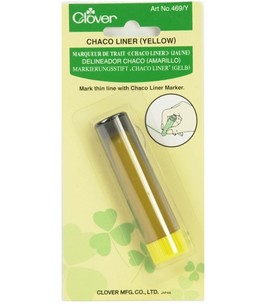
Oftentimes while sewing, there is a need to mark the fabric. For example, you may need to draw lines for quilting, divided pockets, o r a hemline. The chalk wheel marker makes a nice sharp line and wipes off very easily. For a few dollars you can purchase a bag of chalk dust for refills and it last a loooong time.
5. Pincushion
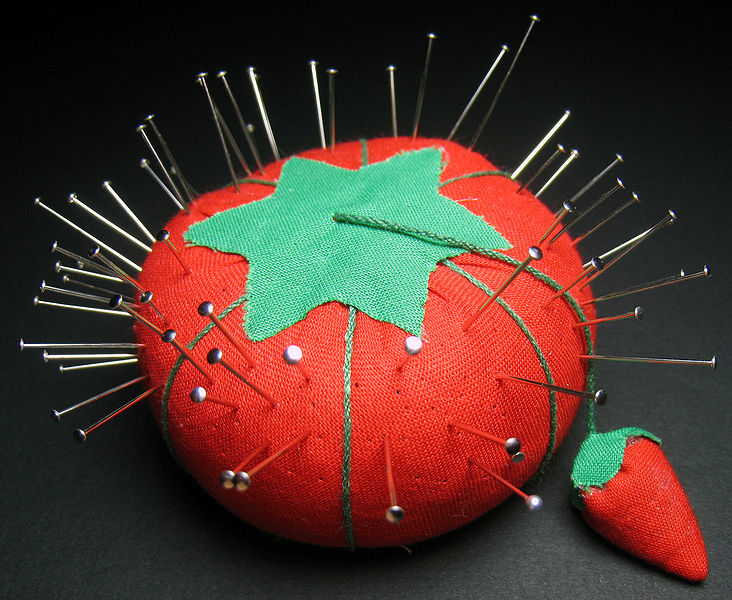
Pincushions are something I can’t live without. They are pretty, functional, and fun to make. I have three that get used on a regular basis, and several others for decorative purposes. They are great scrap busters and you can make them in variety of shapes and sizes.
From a functional standpoint, pincushions are much easier to use — you don’t have to worry your pins falling on the ground as you add and remove pins to your project. If you want to get fancy with your pins and needles organization you can section off the pincushion by type – needles in one section, applique pins in another, and quilting pins in a third.
Finally, the tomato pincushion is pretty much the universal sewing symbol. Why the tomato you ask? According to some, people used to place a ripe tomato on the mantle of a new home to guarantee future prosperity. However, in those days, tomatoes were not available year-round (or would rot easily), so a round ball stuffed with sawdust or sand was used instead. These balls were the perfect place for storing pins, thus the tomato pincushion was born. The strawberry that is attached to most pincushions is filled with emery which is useful for sharpening pins. I wasn’t able to find an explanation for how the strawberry got added to the pincushion…if anyone knows, please enlighten us!
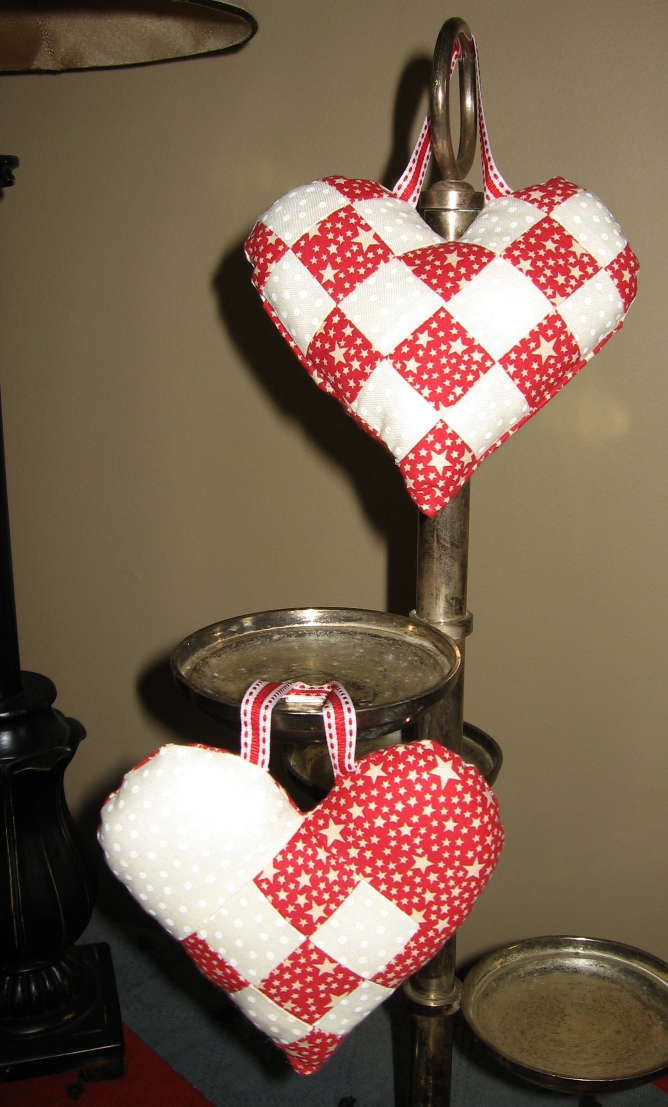
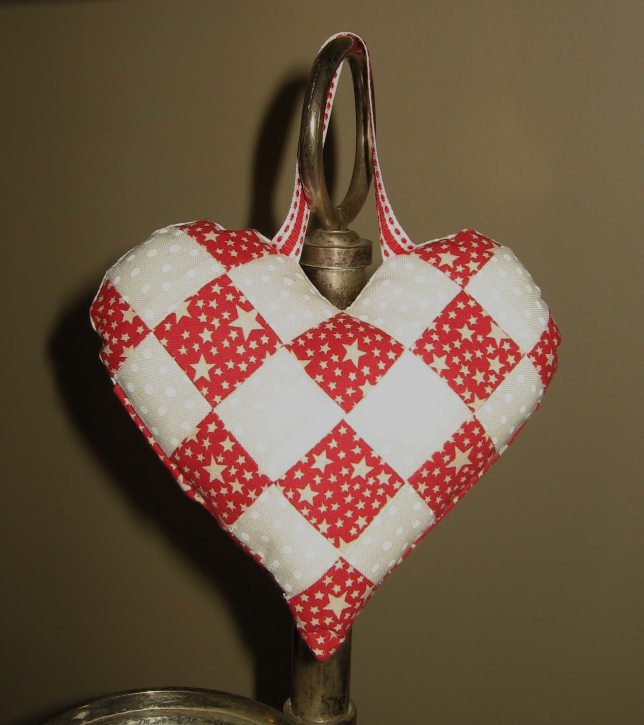
Since everyone needs a pincushion and a place to store all their odds and ends – a Shaker Pincushion is the perfect solution. Click here for my free pattern. Enjoy!
Keep it Thimble!


 Keep it Thimble