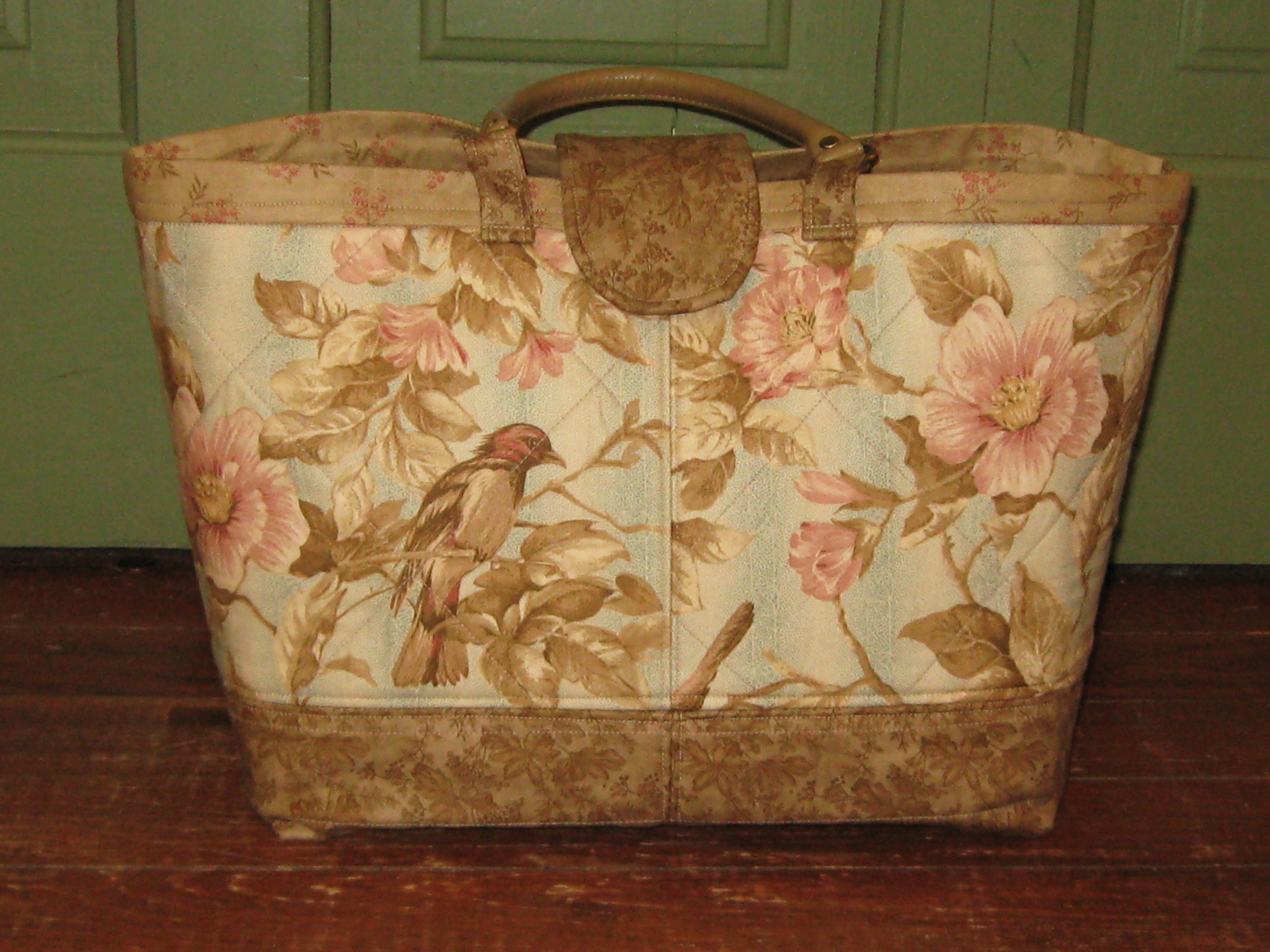
The Miranda Day Bag by Lazy Girl Designs is great for toting around sewing projects, books, magazines, children’s toys, or anything else you need to take with you on the go. The handles on the bag give it a very elegant look and you can dress is up or down depending on the fabric used.
Miranda Bag - Exterior
This version uses the Heritage line from Collections for Cause by Moda. It is one of my favorite fabrics! The birds were fussy cut for the best placement. I love how this little guy is all alone and is looking off into the distance at something.
Miranda Bag - Interior
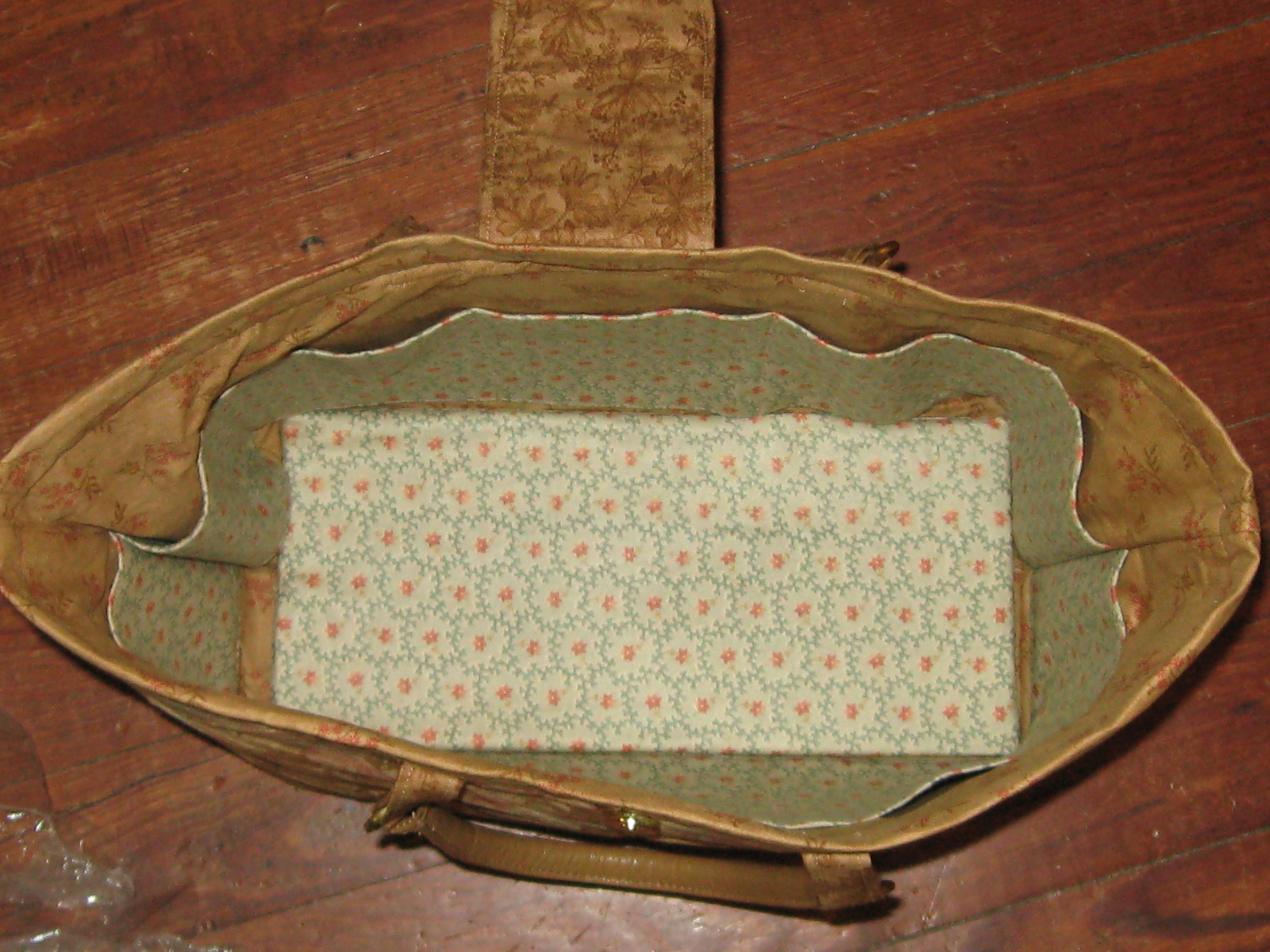
The bag is very sturdy – the exterior is quilted and fusible fleece is used on the interior. This helps the bag stand up so you can easily put things in and taken them out of the bag. The interior includes lots of pockets so you can keep everything organized!
Lazy Girl patterns are really easy to use. The designer includes a photo of each step in the picture, as well as detailed cutting instructions. You can practically make the bag just by looking at the pictures (however I always encourage you to read the instructions too)! The true definition of “keeping it thimble.” (Couldn’t resist that one).
As someone who loves crazy quilting and is always looking for new ideas, I had to get Allie Aller’s Crazy Quilting book. First, it has one of the best subtitles for a quilting book: “Modern Piecing and Embellishment Techniques for Joyful Stitching” (italics emphasis mine). What a great way to remind us why we sew and quilt in the first place!
Allie Aller's Crazy Quilting
The book is divided into seven sections that cover all aspects of Crazy Quilting:
Collecting Your Materials and Tools
Creating Your Own “Fabrics”
Four Ways to Build Crazy Quilt Blocks
Eye Candy: Embellishment!
Gallery of Inspiration
Projects
Work in Progress – A Crazy Quilt from Start to Finish
The author does an excellent job explaining all her techniques and augments this with lots of photos. For example, in the tools section she discusses all the different types of threads you can use, and provides many photos of various samplers that show how the threads look when they are used in stitching. This is very useful when trying to figure out what threads are needed for the look you want for your quilt.
Likewise, the embellishment section contains numerous photos of embroidery stitches and ways to use them in the quilts. She discusses how to use beads, lace, and other types of trim, as well as how to create three dimensional effects (flowers, leaves, insects). You won’t want to throw out scraps of anything again!
Part of the fun with crazy quilting is using all the scraps of fabric to create a unique foundation for your embellishments. There are tons of options for the types of fabric you can use and what you can do with them – Allie discusses all of them! In addition, she provides step by step instructions for how to use photo transfer to create unique fabrics — even without buying the expensive transfer paper or fabric sheets from Jo-Ann’s! (hint, think freezer paper).
Four different techniques for creating foundations are shown. I found this section extremely useful because I was looking for ways to create foundations that didn’t look like some type of modified log cabin (a piece in the center with other scraps radiating outwards in a loose spiral). One of the methods, called “Chunk Piecing” gives you a lot of freedom and enables you to use all those oddly shaped scraps that you couldn’t use in one of the other traditional methods.
Allie Aller's Floral Sampler
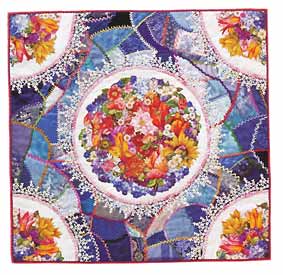
Finally, the part you’ve been waiting to hear about – the Projects! There are six small and creative projects in the book – perfect for getting a taste of what crazy quilting is like and leaving you wanting to do more. What’s great about crazy quilting, is that once you have these instructions, you have the tools, know-how, and inspiration to make an endless number of projects that are unique to your tastes and themes! The picture above is a floral sampler that uses large floral fabric as the base for a beautiful flower garden (perfect for my April Cornell Barcelona fabric!). This is also the project used the example in the “Work in Progress” section.
Allie Aller's The Dreaming Maiden
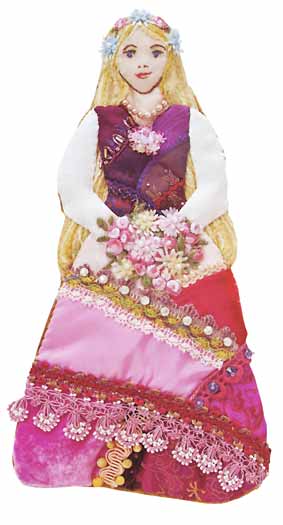
The Dreaming Maiden is another creative idea and perfect for those who aren’t really interested in doing a traditional, rectangular quilt. You can make the maiden look like the favorite girl in your life – what a great gift!
In summary, Allie Aller’s book is an excellent reference for aspiring and experienced crazy quilters. She provides a lot of inspiration and ideas on what you can do with it. You certainly will have a lot of fun experimenting.
Just a quick update on my 2011 Goals (see “goals” tab at the top). I’m pretty happy with how well I’ve been able to follow through on some of my goals for this yea. The Etsy shop is still in the process of getting set up, but I’ve set a deadline for having some inventory in there by the end of April. A few tutorials have been posted and there are ideas for a lot more! My only area where I haven’t made much progress is in getting guest bloggers. A few people are definitely interested, but haven’t had time to write something – so that will likely happen over the summer.
Quilted Sling Bag
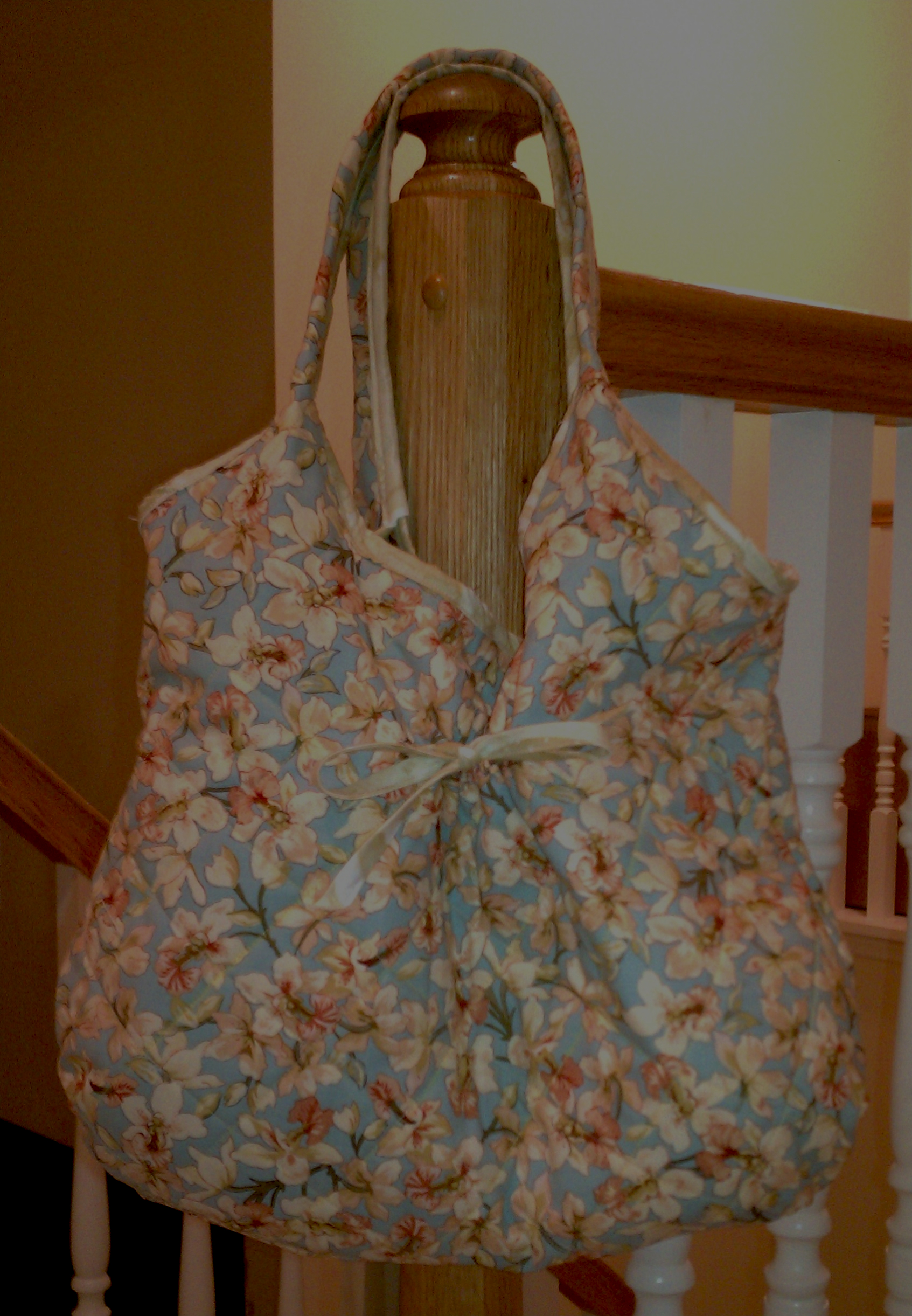
This is a quilted bag that was featured in the April 2011 issue of American Patchwork and Quilting. It is designed by Edyta Sitar of Laundry Basket Quilts. The picture in the magazine was too cute for me to pass up; it reminds me of a Vera Bradley bag with the quilted fabric and the modern lines.
While I am happy with the finished project, it was more time-consuming and a bit more challenging than I expected it to be. There is nothing difficult per se about the pattern, it’s well-written and straight forward, it’s just hard to make this look as good as the picture on the first try.
One area of trouble was gathering the corners so that bag had a nice round shape. My bag looks more like a rectangle with rounded corners. Not a super big deal, but the shape of the bag is important.
The binding was also a challenge. In the instructions, she uses a single fold binding that is machine sewn on one side and then the other side is folded over and hand-stitched. I machine stitched both sides since I knew this would go on the UFO pile once I had everything done except the hand stitching.
You can’t tell in the picture, but the binding around the handles is not the neatest. There is an unattractive place where the binding overlaps and is bulky. Also, since it is stitched by machine, you can clearly see the crooked seams on the underside of the binding. It took a few hours to apply the binding – it is a 5 step process – you bind each of the four curves on the top of the bag, then go back and bind the handles. Once I get better at binding, I could see making this again. It would go much faster!
But, it’s a fun little bag and I really like the fabric. I’ve had this fabric for awhile, and wasn’t quite sure what to do with it. It makes a nice spring bag.
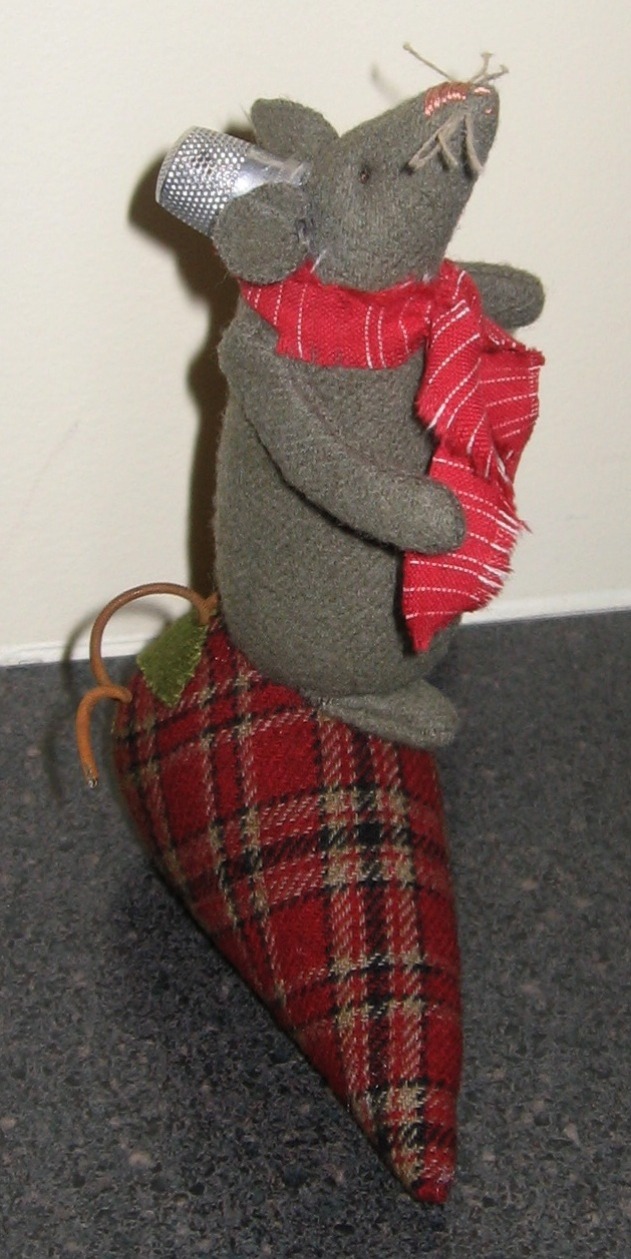
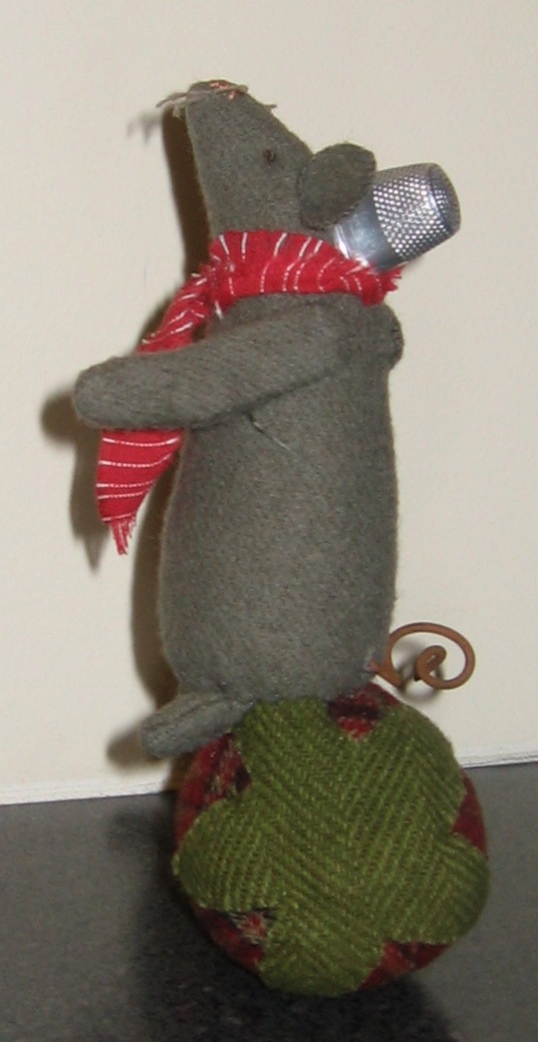
Brenda Gervais has a cute little pincushion called Emery the Sewing Mouse – perfect for any sewing room! I couldn’t resist him , especially with that little thimble hat!
Sewing Mouse
This is a fun afternoon project that requires a bit of this and that. You cut out the mouse body in wool, stitch around the body, arms, and legs and turn these all inside out. The arms and legs are especially challenging since they are so small. Hemostats are great for turning these small pieces since you can working the tips into small openings and get a good grip on the fabric to turn it.
Sewing Mouse
You also do a lot of handwork on this. You stitch the arms and legs on by hand, and then use embroidery floss to create his beady little eyes and pink nose. I added a little mouth as well, so that he has a crooked little smile.
Sewing Mouse
The thimble is glued one (Allene’s Quick Grab is good for this), as is his tail (which is a rusty piece of wire twisted into a tail shape). The strawberry is sewn on the machine and stuffed with a filling of sand, sawdust and fiberfil. Once stuffed, you tack on the green cap by hand. The project is finished when you stitch Emery down on the strawberry. How cute is this?
I really love miniature quilts – they are like little works of art and it’s a great way to use up your scraps. However, don’t be fooled into thinking that since they are so small they will take less time to make. It seems they actually take more time to make since you are dealing with such small pieces and there are a lot of pieces in to sew together!
Little House on the Prairie
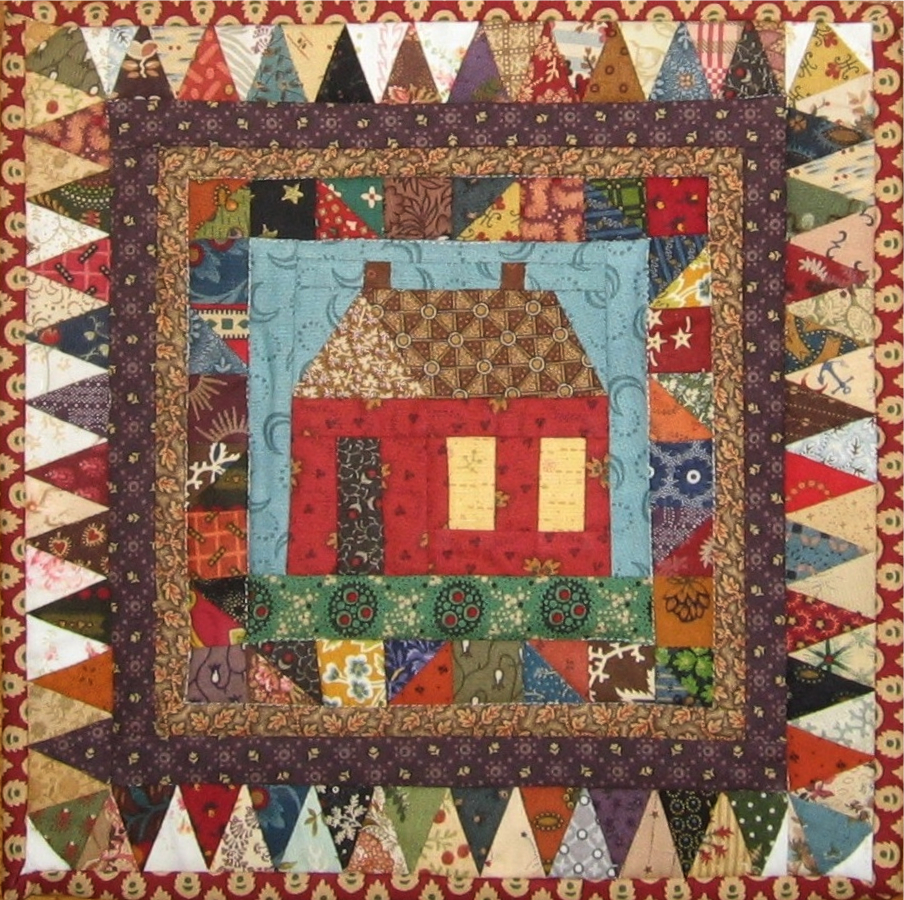
I saw this adorable little house in a book called Little Bits of Whimsy by Kathleen Brooks Rindal and decided to attempt my first miniature quilt. The finished product is about 9″ square and has about 175 little bits of fabric. Almost every single piece of fabric in this is unique – look closely to see if you can find where there are repeats (one is VERY obvious – at least to me).
Since the fabric pieces are so small for miniature quilts, it needs to be foundation pieced. This is something I have always wanted to try, but have always been a bit leery of it – it seems so difficult. After doing it, I can honesty say foundation piecing is easy to do and the results are wonderful. You do need to concentrate while doing it, but once you get into a rhythm it all goes smoothy.
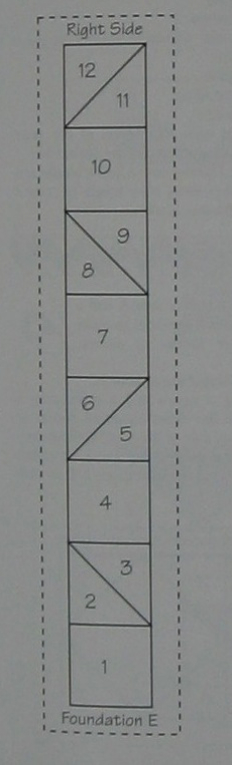
Here is a brief tutorial on the basics of foundation piecing. You start by tracing (with a pencil) the pattern onto tracing paper or vellum. This paper template will form the foundation of the block. Each piece on the pattern is numbered, and these number tell the order in which the pieces are sewn onto the foundation (see picture – Step 1).
Step 1 - Pieced Border Template
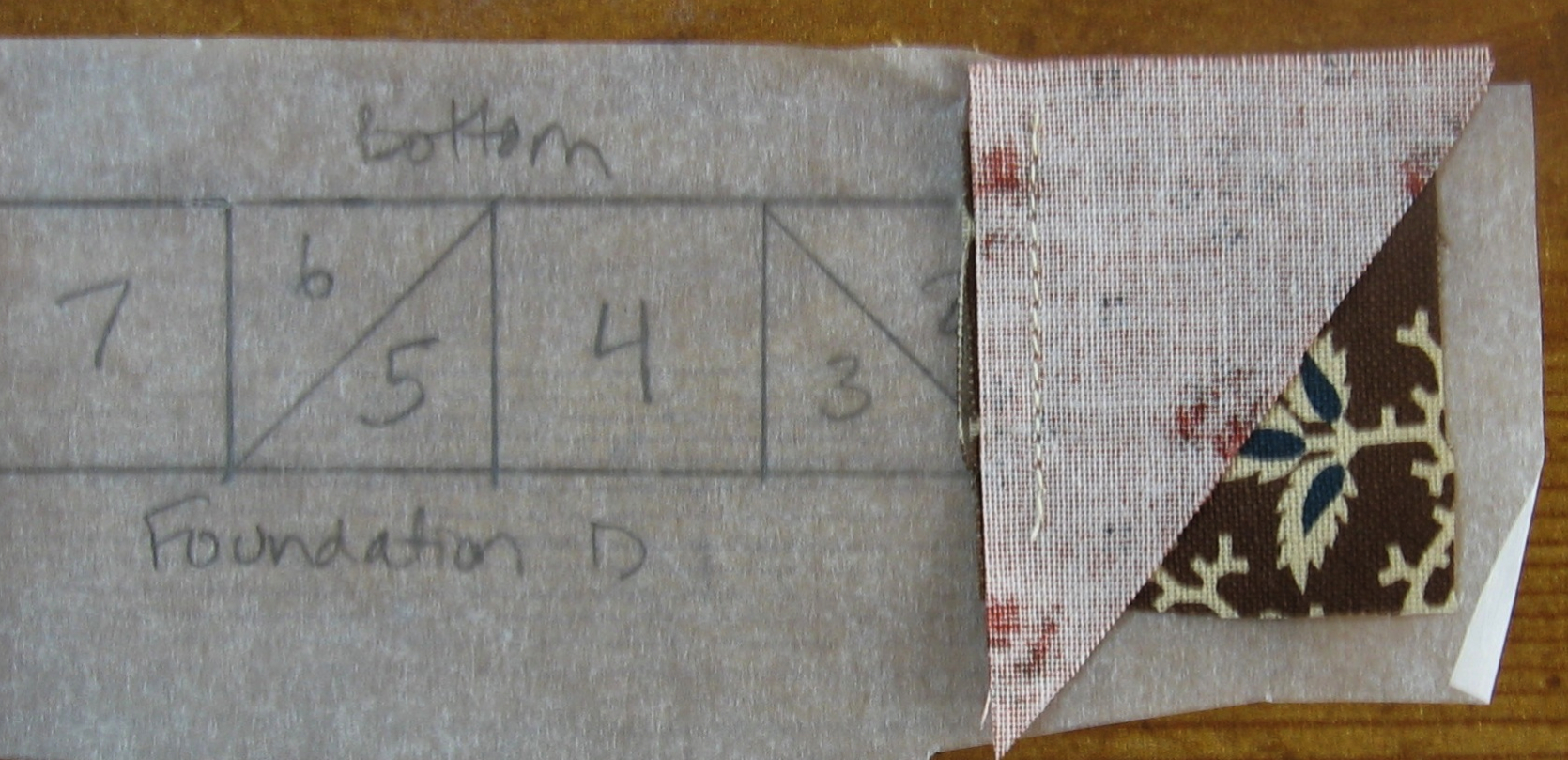
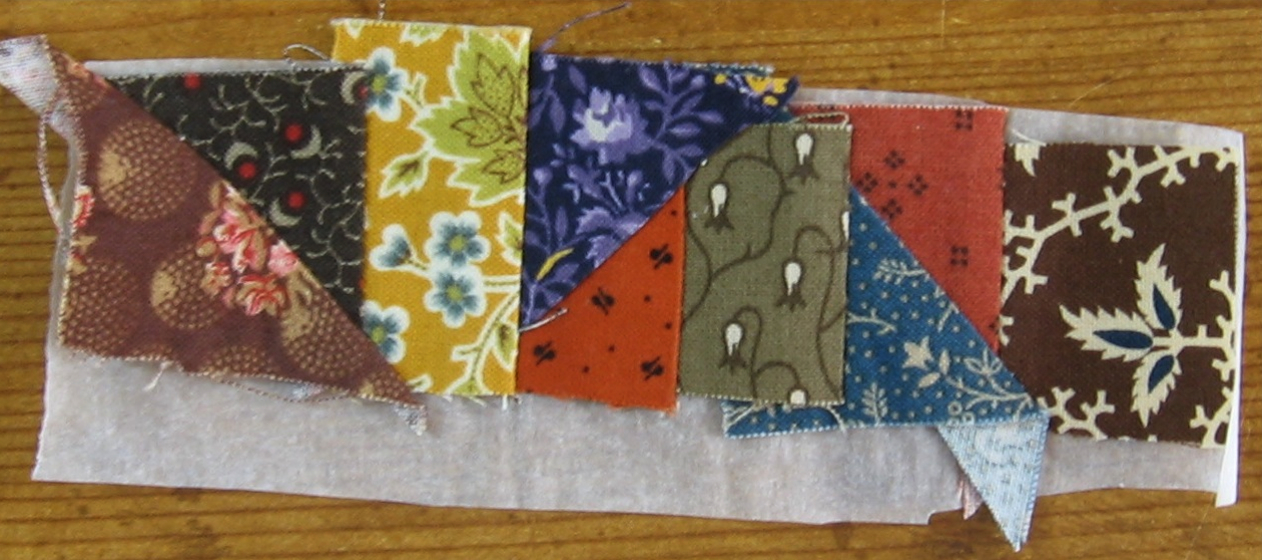
Once the pattern is traced, you rough cut a piece of fabric that is the shape of the first piece. Include a generous 1/4″ inch seam allowance when rough cutting the piece. Place the fabric right side up on the front of the pattern. Next, rough cut fabric that will be used for the second piece in the pattern. Place this piece right side down on the first piece (see picture – Step 2).
Step 2 - Placing Fabrics
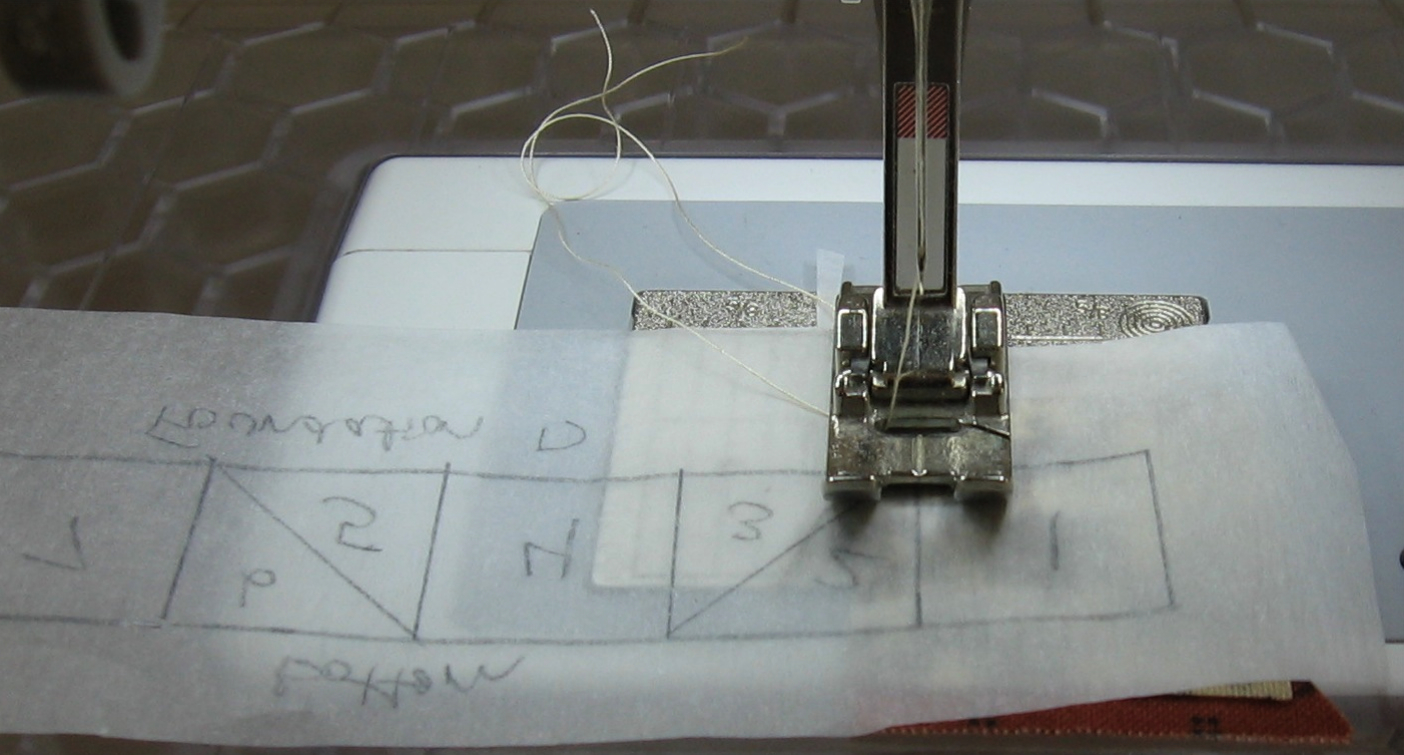
Pin these piece in place. Flip over the paper foundation and you will be able to see the lines of the pattern (this is why the paper needs to be transparent). Sew along the line on the pattern where the two pieces are overlapping (see picture – Step 3).
Step 3 - Sewing First Seam
Once the seam is sewn, flip the foundation over to the right side. Press the two fabric pieces open (see picture – Step 4). If necessary, trim off any excess fabric – but be sure to maintain the extra for the 1/4″ seam allowance.
Step 4 - Pressed Seam
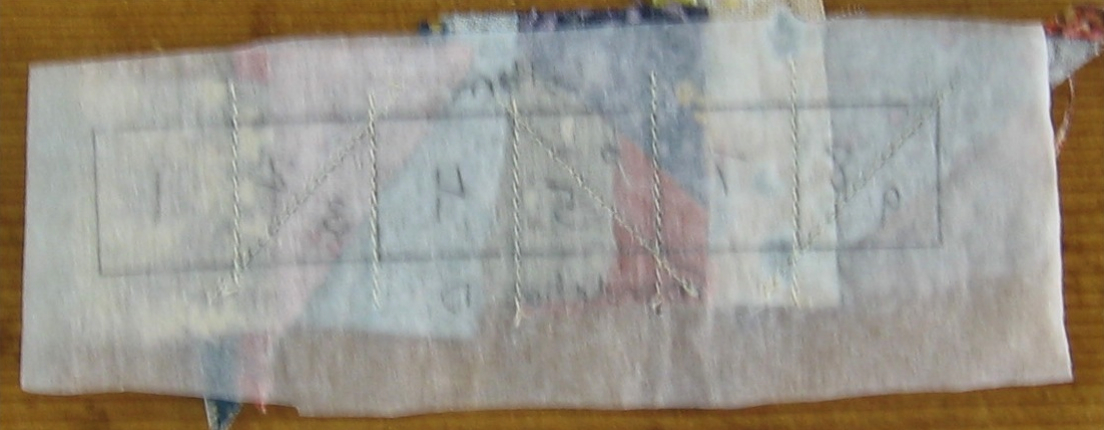
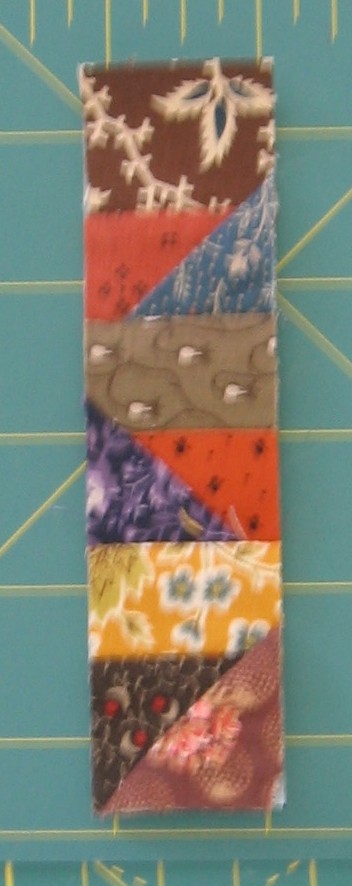
Continue sewing the pieces in this manner following the order of the pattern until completed (see picture – Step 5).
Step 5 - Pieced BorderStep 5 - Back of Pieced Border
Once you have the pattern completed, trim off the excess fabric while still maintaining the 1/4″ seam allowance. To do this, take your ruler and line up the 1/4″ line measurement with the pattern edge and trim with a rotary cutter. This section is completed!
This little house pattern is structured so that you foundation piece the different parts (the house block, the inner border, the outer border) and then sew the whole thing together.
The last step is to quilt and bind it. I did a little of stitch in the ditch quilting around the inner borders. The project is so small you could probably get away with not quilting it at all. However, the quilting around the borders makes it look more finished. There were some places where the machine quilting is obvious, so I may rip it out and just quilt by hand (however, I have to find the time first!).
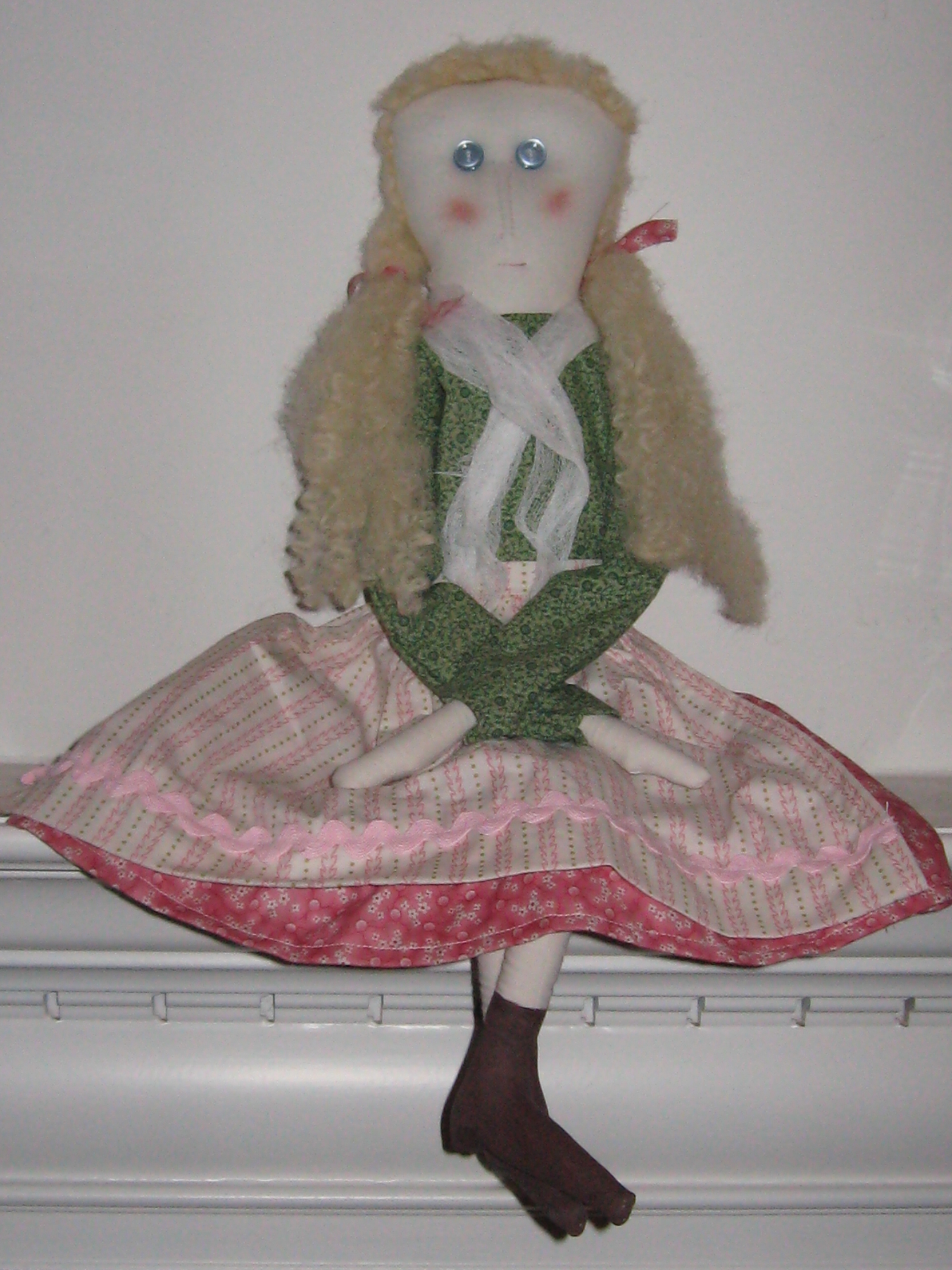
Here is my first attempt at making a primitive doll – Miss Emily. I made her in cottage style fabrics, so she doesn’t really look prim – but I like the general effect. I might end up staining her with a walnut crystals as she looks too clean :).
Miss Emily
I can’t remember who made the pattern, but it was easy to follow. Dollmaking is a little bit different than I thought it would be (actually easier). For one thing, you don’t cut out the pattern pieces and then sew them together. Instead, you trace the pattern onto the fabric, and then place the fabric right sides together, and sew around the line you traced. This eliminates the problem of the cut pattern pieces sliding around as you are trying to sew around curves.
She is a basic cylinder with arms and legs sewed on separately. The arms and legs are filled partially with sand so you can pose her easily (she looks great sitting on top of the fireplace). Her hair is made from doll hair (you can get this at the craft store). I decided to give her bangs since she has such a high forehead, but may end up redoing her hair with thin yard instead.
The dress is simple to construct. The shirt is “flat construction”, meaning you cut out the front and back of the shirt and sew it together. The neckline and the sleeves are finished by simply turning the raw edges to the inside. The skirt is a long rectangle that is gathered at the waist. The apron is a rectangle hemmed on 3 sides, with a small waistband. Overall, her outfit turned out really cute!
My son is at that age where he gets invited to lots of birthday parties, so I am always on the look-out for fun little things to make for party favors and little gifts.
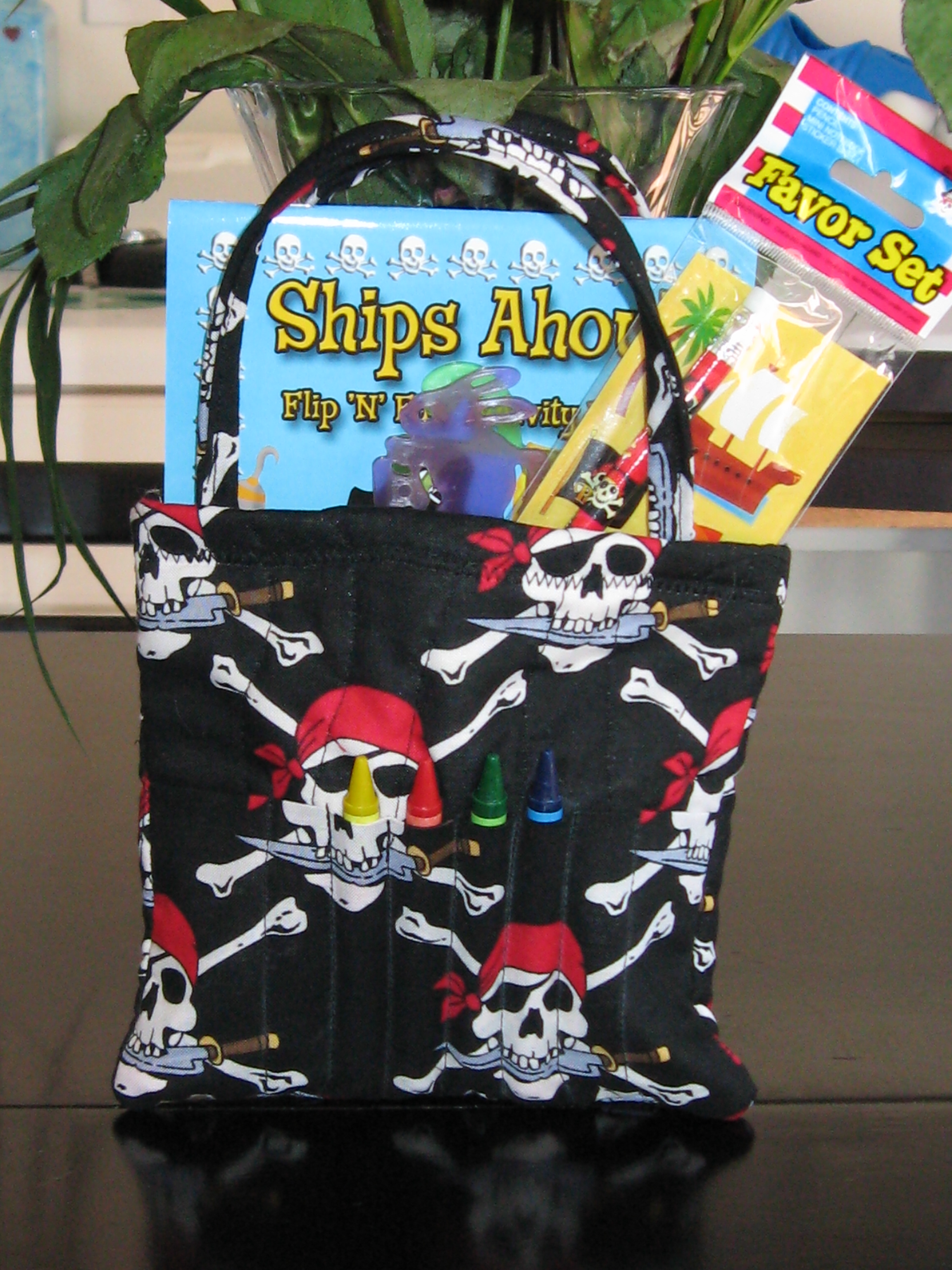
This first favor is one I made for my son’s Pirate themed party. The pattern is the Child’s Coloring Bag from Clothesline Quilts. What’s great about these bags is they don’t take up a lot of fabric and you can easily make 8 in about 90 minutes (which includes the time to quilt the fabric). Next, go to the Dollar Tree and pick out some crayons and other little things to go inside!
Pirate's Booty Party Favor
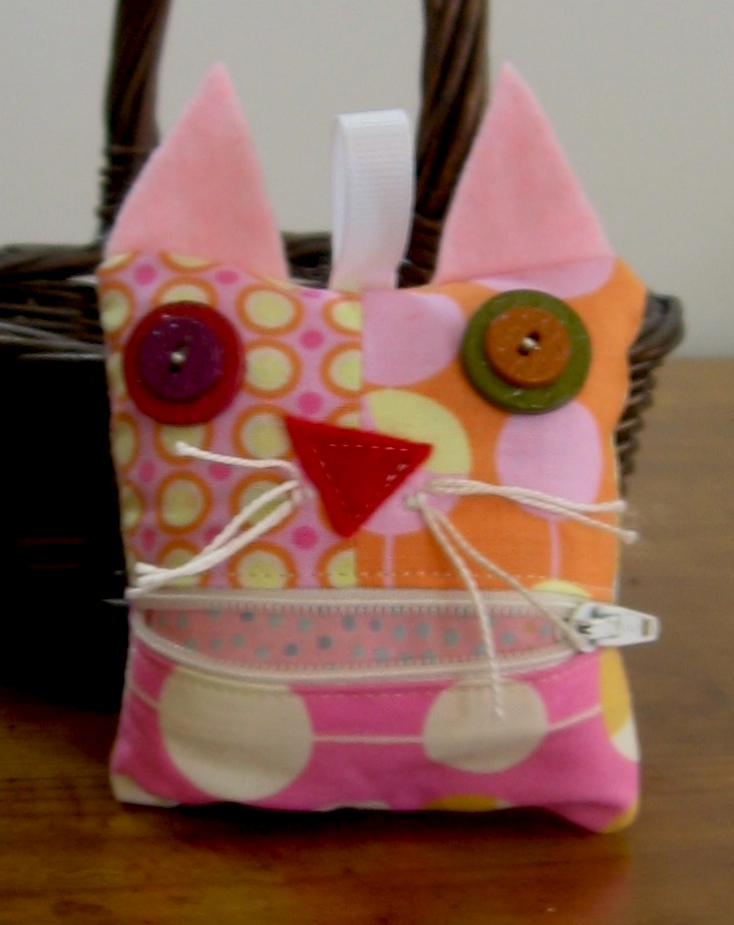
The next favor is a Zipper Critter by Indygo Junction. The pattern comes with three different sizes and three different types of of animals (dog, cat, pig). It’s great for using up scraps and any old zippers you have laying aroud. What’s nice is that you can personalize the fabric choice for each child, or do it all based around a theme. These critters also make nice package decorations – especially the smaller one that is attached to a lanyard. One of these takes about 30 minutes to make (although you can speed things up if you want to make several by cutting them all out at once and sewing them assembly line style).



 Keep it Thimble