Tutorial – Sock Rabbit (aka Sock Bunny)

Diamond the Rabbit

Happy Easter everyone!  This tutorial might be a bit late, since you can’t make these for an Easter Basket, but I really wanted to post this cute little rabbit I made from some socks bought at Target for a dollar!  My plan was to make up my own directions, but I figured someone had already done something like this and a quick Google search turned up a free sock rabbit pattern at Clubhouseb.com.  Download the pattern and cut out the sock pieces per the directions listed.  This tutorial assumes you have the pattern handy for reference.
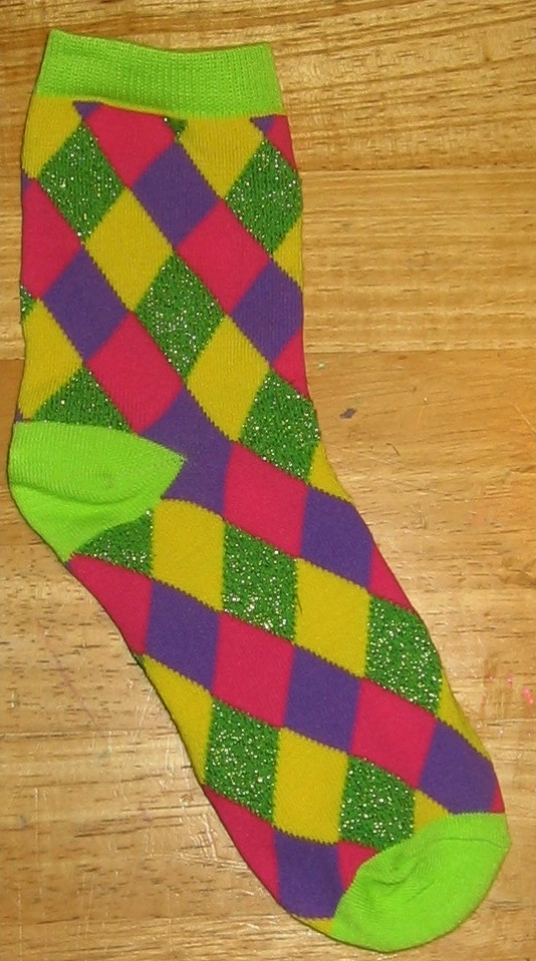
Step 1 - Plain Sock

As you can imagine, you start with a plain sock.  Turn the sock inside out and arrange the heel so that it is facing you.   Following the directions on the downloaded pattern, draw lines on the socks for the ears and legs.  Stitch around the lines (per the pattern) and cut the ears and legs apart.
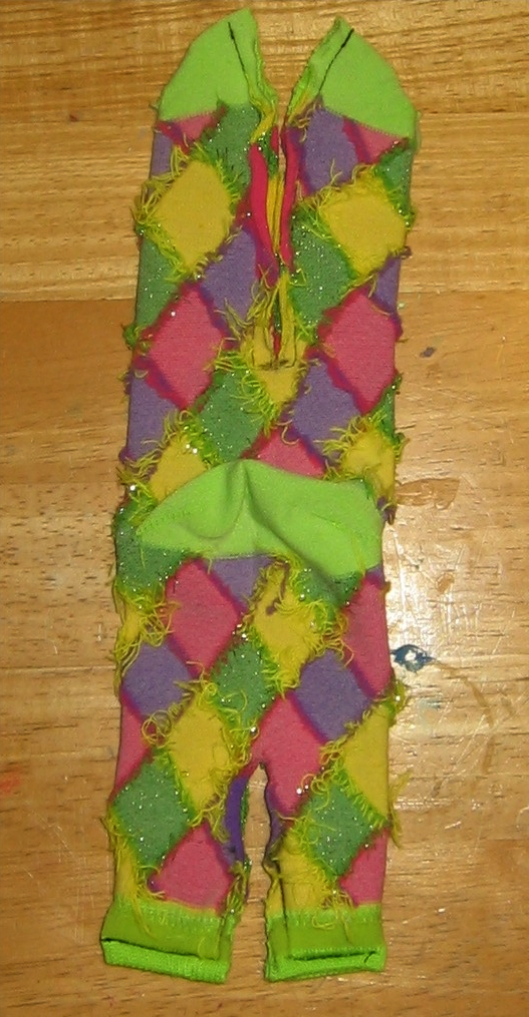
Step 2 - Stitch along lines for ears and legs

Turn the whole thing inside out (there will be a opening in the crotch for this).  Use a point turner to poke out the tips of the ears and the corners of the feet.
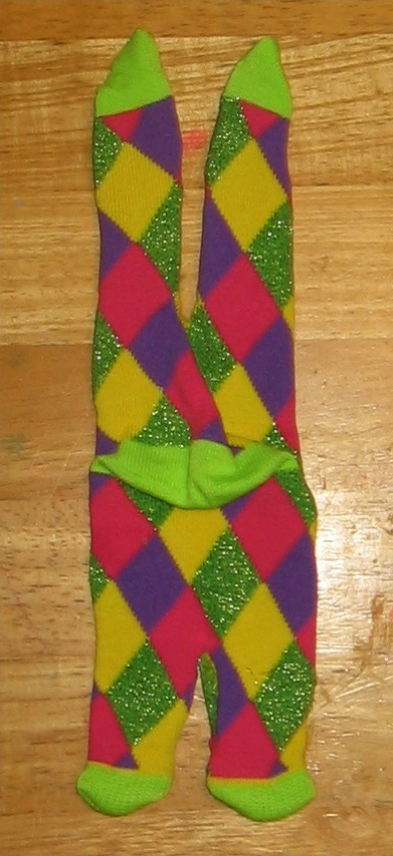
Step 3 - Turn inside out

Stuff with fiberfill.  The socks I used were children’s size, so the rabbit will be about 7″ high (the ears add about 4″ more height).  Be careful when stuffing – you don’t want to overstuff and you don’t want the sock to run near the raw edges between the legs.  Whipstitch the opening shut with matching thread.
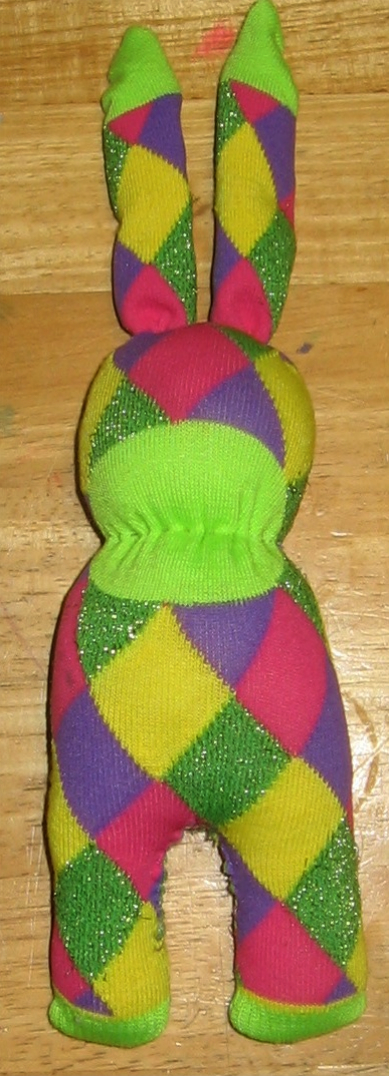
Step 4 - Stuff and stitch

Next, make a running stitch around the base of each ear, pull to gather, and tie off  (the pattern indicates doing the running stitch across the ear, but I did it around in order to make it easier to gather and tie off).  Figure out where the neck is going to be and make a running stitch around the neck, pull to gather, and tie off.
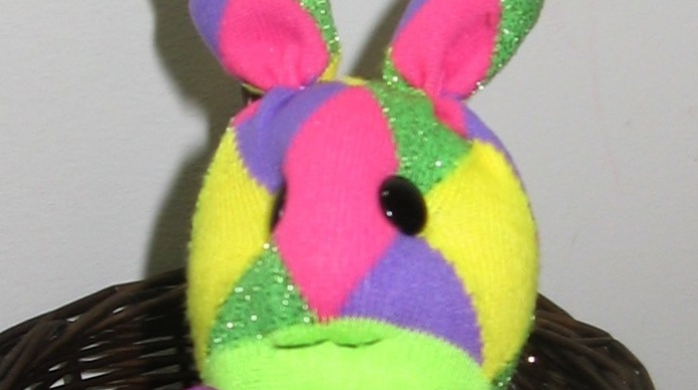
Step 5 - Make the face

For the face, take two buttons with shanks and sew on according to the directions.  If you try to use buttons with holes you will find that the eye indentations will not look correct.  Rabbit eyes are positioned more to the side instead of the front, so using the shank buttons makes the indentations appear on the sides of the face, instead of the front.   Create the mouth and nose per the directions. I didn’t statin stitch a nose since the pink diamond from the argyle pattern is positions perfectly for a nose – what a happy accident!
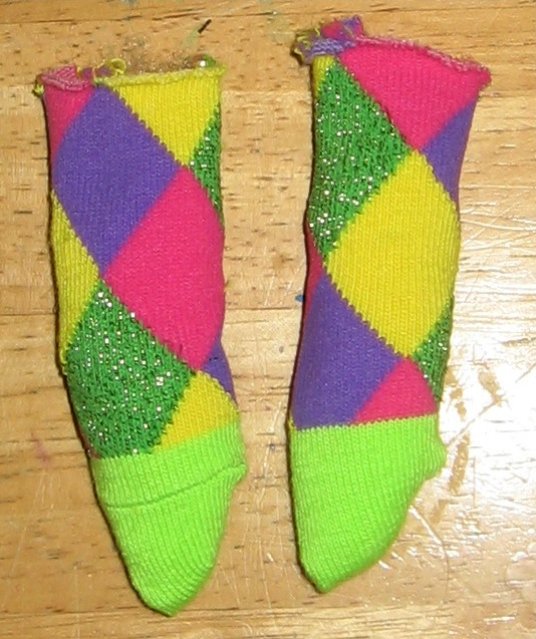
Step 6 - Make arms

Take the other sock and create two arms.  For my arms, I cut off the toe of the sock and stitched down the middle (like I did with the ears) so that the arms would be pointed on the end like paws.
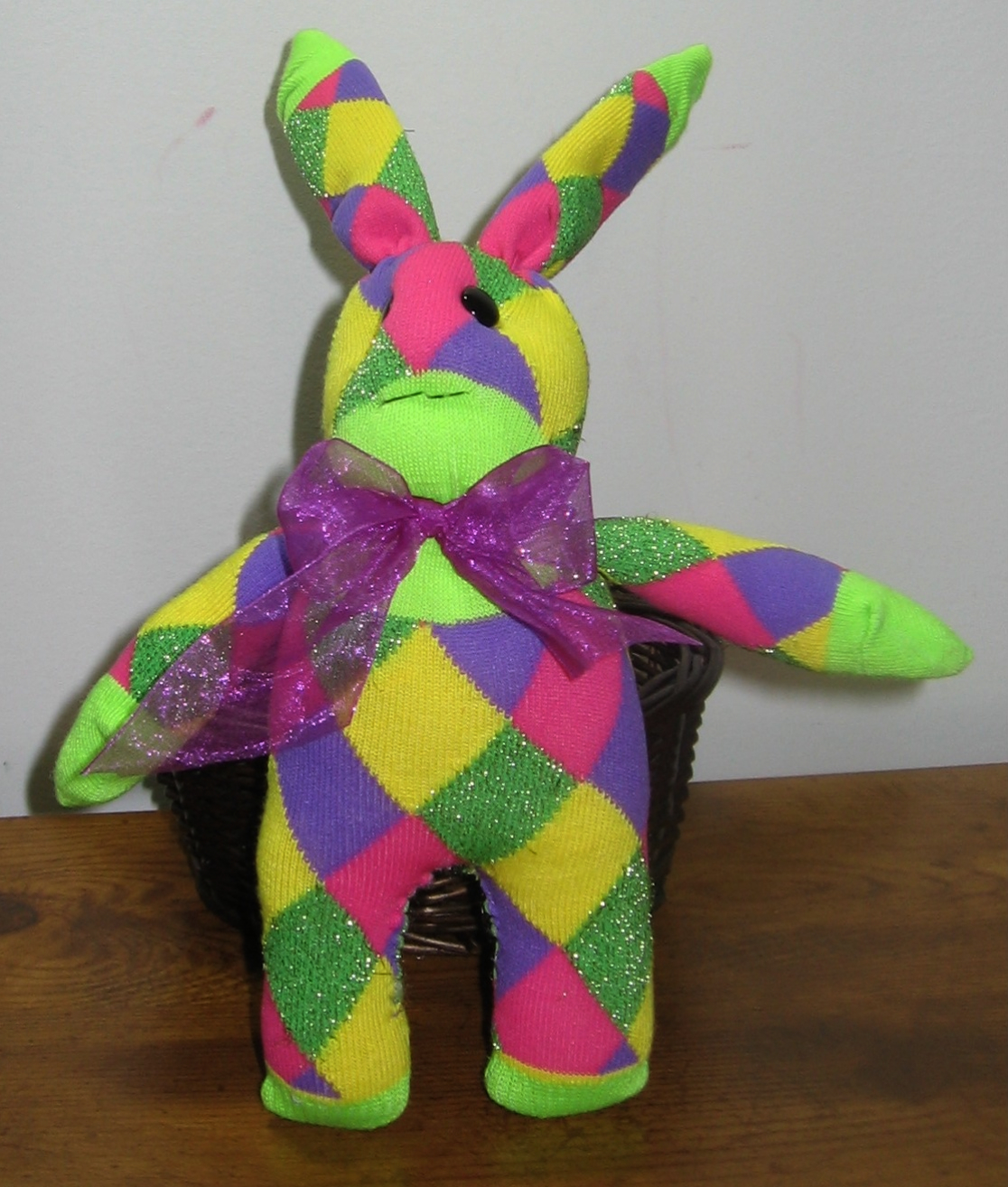
Step 7 - Sew on arms and add bow

Stuff the arms lightly and whipstitch them into place at the neck.  Tie a bow around the neck to complete the look and you have an Easter Bunny!   If you have the inclination, you can also embellish him (or her) further by adding a hat, shirt, dress, basket, etc.  If you want to get really fancy you can sew a running stitch at the wrists and ankles to make the paws more defined.

Keep it Thimble!
Giveaway Winner!

Thanks to everyone who entered the contest!  I am on a business trip right and and am blogging from the hotel room.  I will keep you in suspense for a few seconds longer though – the winner will be announced at the end of this post!

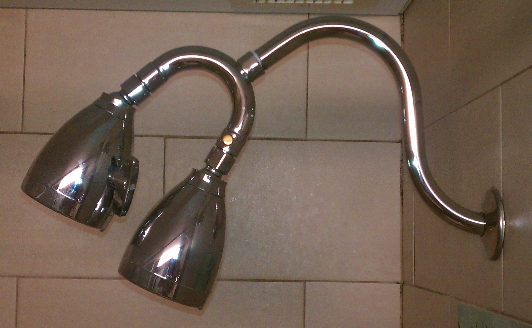
Traveling can be fun anytime, but it is even better when the Company puts you up in a nice hotel.  This time I had the pleasure of staying at the Westin.  In addition to their very comfortable beds and pillows – they had something I’ve dreamed about – a double shower head!

Luxurious Double Shower Head

Now before you think I am getting a little too excited over this, imagine yourself with the water as hot as you want, no one interrupting you, taking as long as you want, and then add the luxury of a double shower head!  I will miss you my friend.

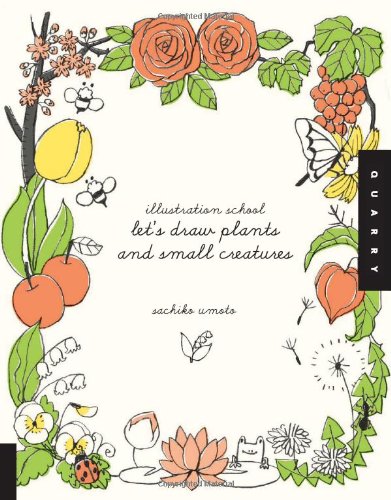
Let's Draw Cute Plants and Animals!

Also, I don’t have time to write a full review for these right now, but I bought these two books and highly recommend them.  The first one is called “Let’s Draw Cute Plants and Animals” by Sachiko Umoto.  It’s a fun little book that shows you how to make some very nice illustrations.  Although, it’s geared towards children, adults will enjoy it as well.  I picked this up so I can start improving on my drawing skills (necessary for some of the patterns I am working on).

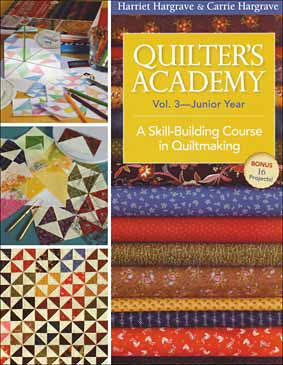
Quilter's Academy - Vol 3

The second book is the “Quilter’s Academy – Vol 3” by Harriet and Carrie Hargrave.   As you recall, I posted a review of Vol 1 awhile back and am pleased to say the Vol 2 and Vol 3 are just as interesting and educational.  I am still working through some of the techniques in Vol 1, but find these are all good reference books for any quilting questions I have.

Winner of the Tulip Purse - Comment 8!

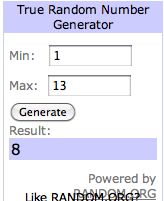
Now to announce the winner!  I had 13 entries (all of them recorded in the comments) so I used a random number generator to pick which comment was the winner.  I am pleased to announce it is comment #8 – Sandi H!

Congratulations Sandi!  Please email your address at keepitthimble@gmail.com and I will get it in the mail this weekend.

Keep it thimble!

Giveaway – Tulip Purse!

As promised, there will be more giveaways this year.  I meant to do this earlier, but time is just flying by!

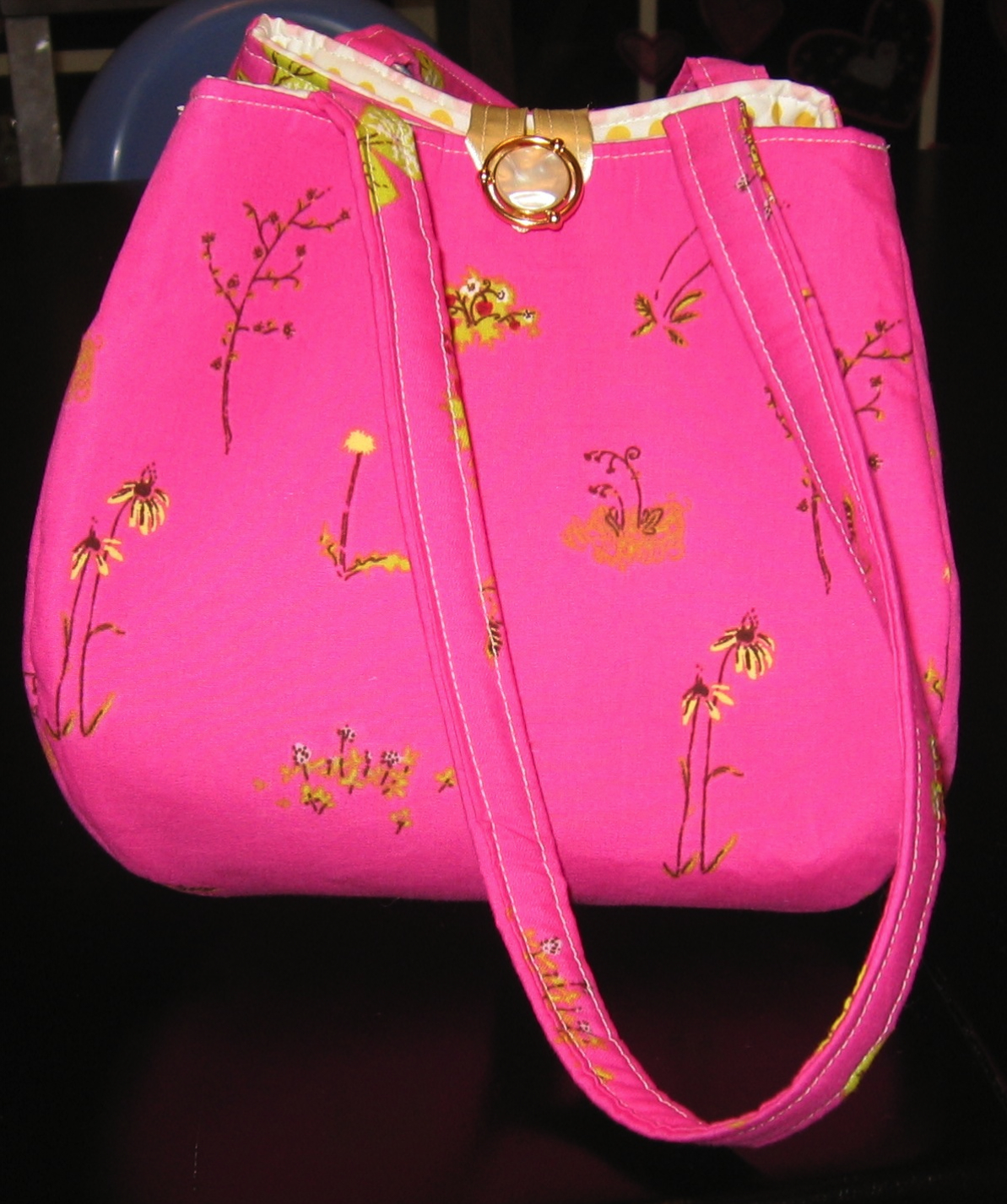
Hot Pink Tulip Purse

This charming hot pink Tulip purse is the first giveaway of 2011!  It is the perfect accessory for your spring wardrobe. It also makes a fun little sewing case.  There are a few ways to enter and you will get one entry for each one (so if you do all four things, you will be entered four times).  You can:

  1. Leave a comment on this post (include your email)
  2. Subscribe to my blog (see link on the top right-hand sidebar)
  3. Add a link to this giveaway on your blog
  4. Add a link to my blog on your blog’s sidebar

If you do items 3 or 4 on the list, please email a link to your post/blog at keepitthimble@gmail.com so I will know to add these entries to the hat!

The deadline for entering Wednesday night, April 20.  The winner will be selected randomly from all entries early Thursday morning.

Keep it thimble!

Blast from the Past!

I was sorting through some things in the kitchen yesterday and I came across my first quilting project ever!  I started sewing about 6 years ago and one of the first things I made was a set of placements and napkins.

First Sewing Project Ever!

The fabric was something that I bought a years ago (while still in college) for project that I can’t even remember right now. The bright yellow and hot pink fabrics really grabbed my attention at the time, but for the life of me I can’t remember what I bought it for in the first place.

When I received my first sewing machine for Christmas in 2003 (thanks mom!), I wasn’t quite sure what to make with it, so it sat in the closest for almost two years (hard to believe that now)!!  One day, I saw a booked called “Quilting 101” and it had directions for making these cute patchwork place mats – finally the perfect project for the yellow and pink fabric.  There was not enough fabric for backing, so I just used plain muslin.  The binding is not one continuous piece, instead each edge is bound separately (so the corners are now fraying and uneven).

Once I got the place mats sewn and quilted, matching napkins were in order.  Believe it or not, Jo-Ann’s had something that matched perfectly!  I was so proud of my first project and am looking forward to using them again this spring!.

What was your first sewing project?  Or what project made you catch the sewing bug?

Keep it thimble!

Tips for Sewing Charm Square Bags

It seems that I am living up to my “bag lady” name, this is the third or fourth bag I’ve posted in the last 2 months!  Bags are a great project because you can completely finish them with 2 – 3 sessions of good sewing time.  They are also very functional and make great gifts!

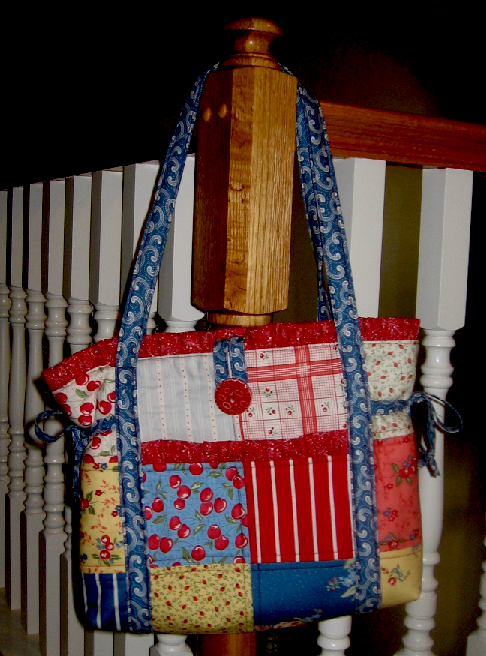
Sew Charming Bag - Small

If you are frequent reader you will know that I am crazy about charm square bags.  After making so many, I’ve come up with some guidelines for how to place the charms to create more aesthetically pleasing results:

  1. Place dark squares on bottom, medium squares in center, and light squares on top of the bag.
  2. Another variation is to alternate between light and dark squares on each row to create a checkboard of lights/dark.
  3. Be mindful of where squares are placed on the side and bottom, as these will touch squares on the other side of the bag when the exterior is sewn together.
  4. For pocket pieces or other accents that need to stand out from the bag, use the squares that will contrast the most in terms of pattern and then color.  For example, when working with a predominantly floral fabric line, use the squares that feature lines/shapes or other bold patterns.
  5. Group squares of like colors when creating pockets.  This sets off the pocket as a decorative element on the bag.  Additionally, you can alternate two different colors or two different values to create something that looks unified.
  6. When choosing fabric for the handles, pick a medium tone.  Since the handles provide a unifying element to the bag I find that medium tones blend better with the bag.
  7. Don’t have squares of the same pattern but different color touching each other (but they can be placed diagonally from each other if needed).
  8. Mix up the small, medium, and large patterns in the square placement.
  9. Avoid using the solid colored squares (this is just personal preference since I like to show off all the fabric patterns in the bag).
  10. When only using part of a charm pack, it is useful to focus on using 4 – 5 colorways.  For example, I had a charm pack that featured red, white, light blue, dark blue, and black.  I entirely removed the black and dark blue from the choices.  However, you can use these colorways for lining or handles.

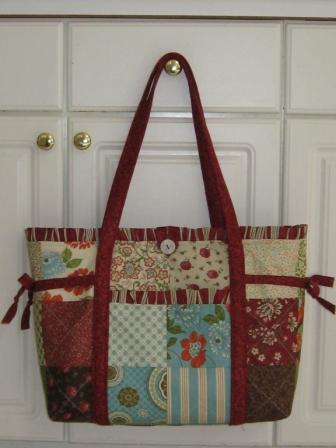
This is Sew Charming Bag by Rose Hip Lane and is by far my favorite!   You can make two sizes small (shown above) and large (shown below).  The large bag contains a nifty divided pocket that has room for notebooks, pencils, and other supplies.

Charm Tote
Charm Tote - Large

One reason this bag stands out is because of the ruffle on the pocket and top of the game.  The ruffle is easy to create and sew on – even for beginners.  You start by cutting two strips of fabric and then you join them to create one long strip.

When joining strips, I prefer using a mitered seam since it has less bulk and looks more polished.  Here’s a quick tutorial on how to create a mitered seam:

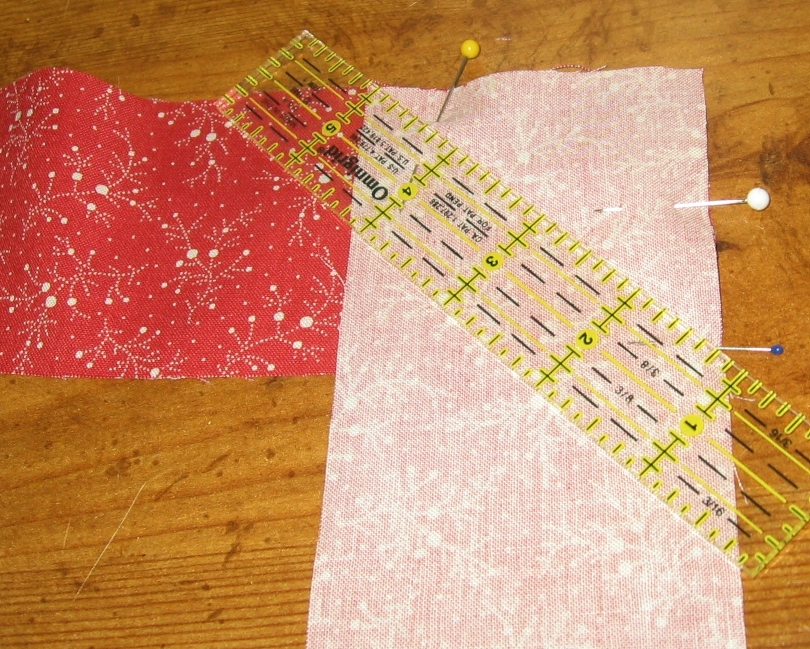
Step 1 – start by putting your strips right-sides together at right angles to each other.  On the top strip, use a pin to mark where the bottom strips ends (this way you can clearly see where the strips overlap to make a square).  Take a ruler and draw a diagonal line from left to right.  Refer to the picture to make sure you are drawing your line in the correct place.

Joining Strips with Miter - Step 1

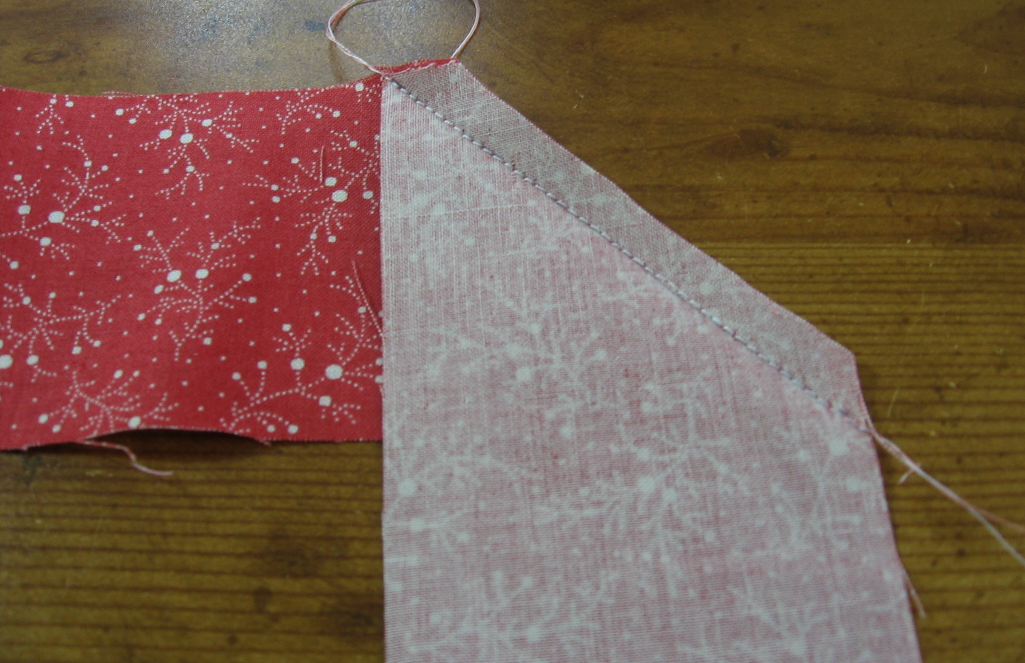
Step 2 – Sew along the line you just marked.  Before cutting off the extra corner, open up the two strips to check that they match up and you have created the miter correctly.  Now, you can trim off the excess corner.

Joining Strips with Miter - Step 2

Step 3 – Press the seam open and you will have a nice diagonal seam joining the two strips together!

Joining Strips with Miter - Step 3

Keep it thimble!

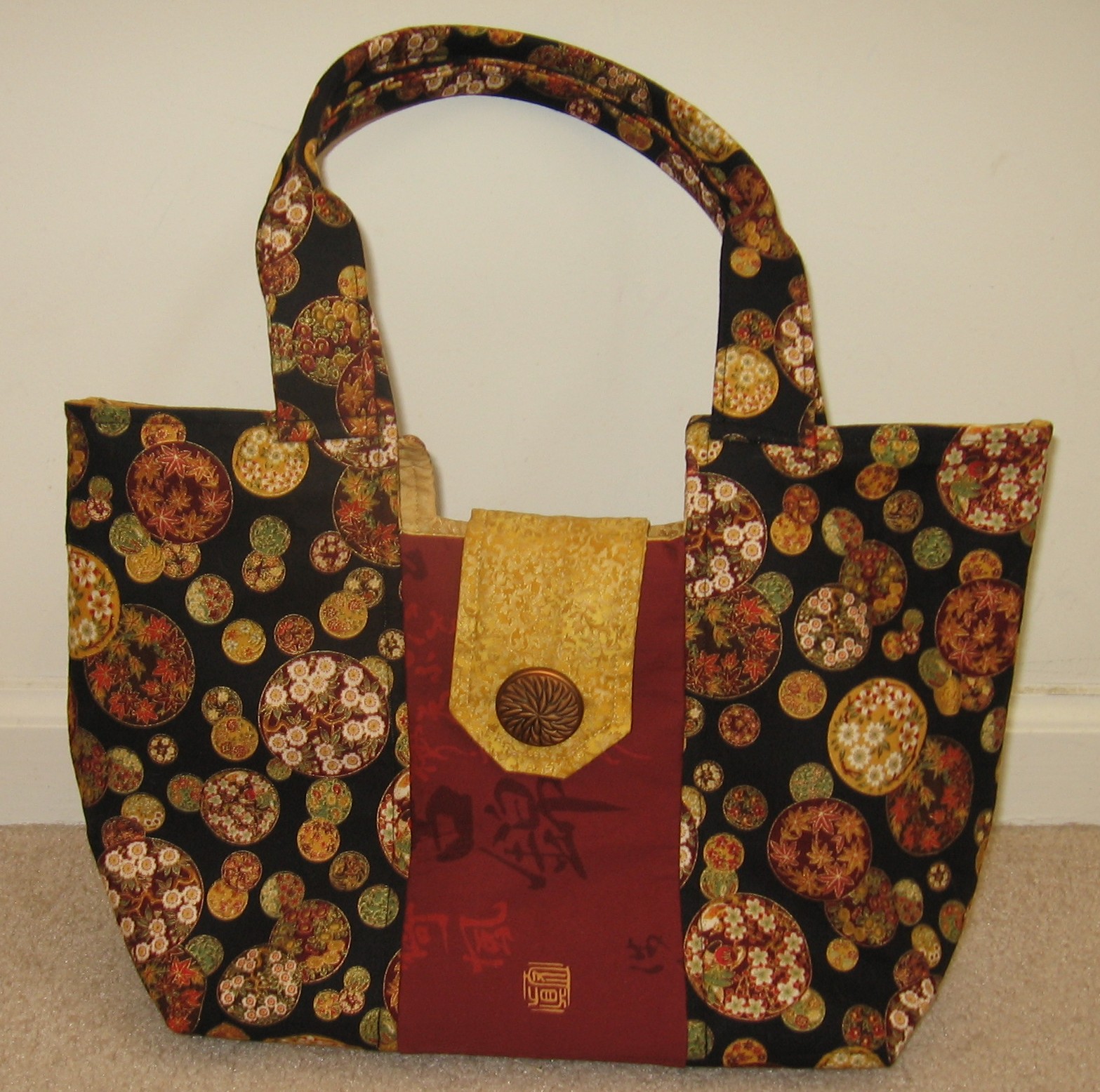
Gracie Handbag

Here’s a fun bag called the Gracie Bag from Lazy Girl Designs.  It’s very easy to make and it’s something even a beginner could do.  The Lazy Girl Design patterns are great because they are well-written and have lots of pictures.  You could complete the purse just by looking at the pictures (although I wouldn’t recommend it).

Grace Handbag

The classic style and details on this bag make this a fashionable bag for most any occasion – it definitely does not look “homemade.”  I rounded the tab on my bag for a more finished look.  I also used a different color top thread and bottom thread so that that edge stitching on exterior and lining matched the fabric appropriately.  This is a small thing, but these details can make a difference!

Gracie Handbag - Koi Fish

In other news, there are a few things in the works for this month:

  1. Free Pattern (it’s a surprise, but a quick easy one, perfect for summer)
  2. Giveaway (sometime in the next two weeks)
  3. Reader Survey (I want to get some information on what you’d like to see on the blog).

Keep it Thimble!

Spring is Here (I think)!

The birds are chirping the flowers are blooming, and spring is finally here (I think).  Last week we had a blast of winter weather and we are supposed to be in the 30’s tonight.  But after that, it is supposed to be consistently in the 60’s and 70’s for spring!

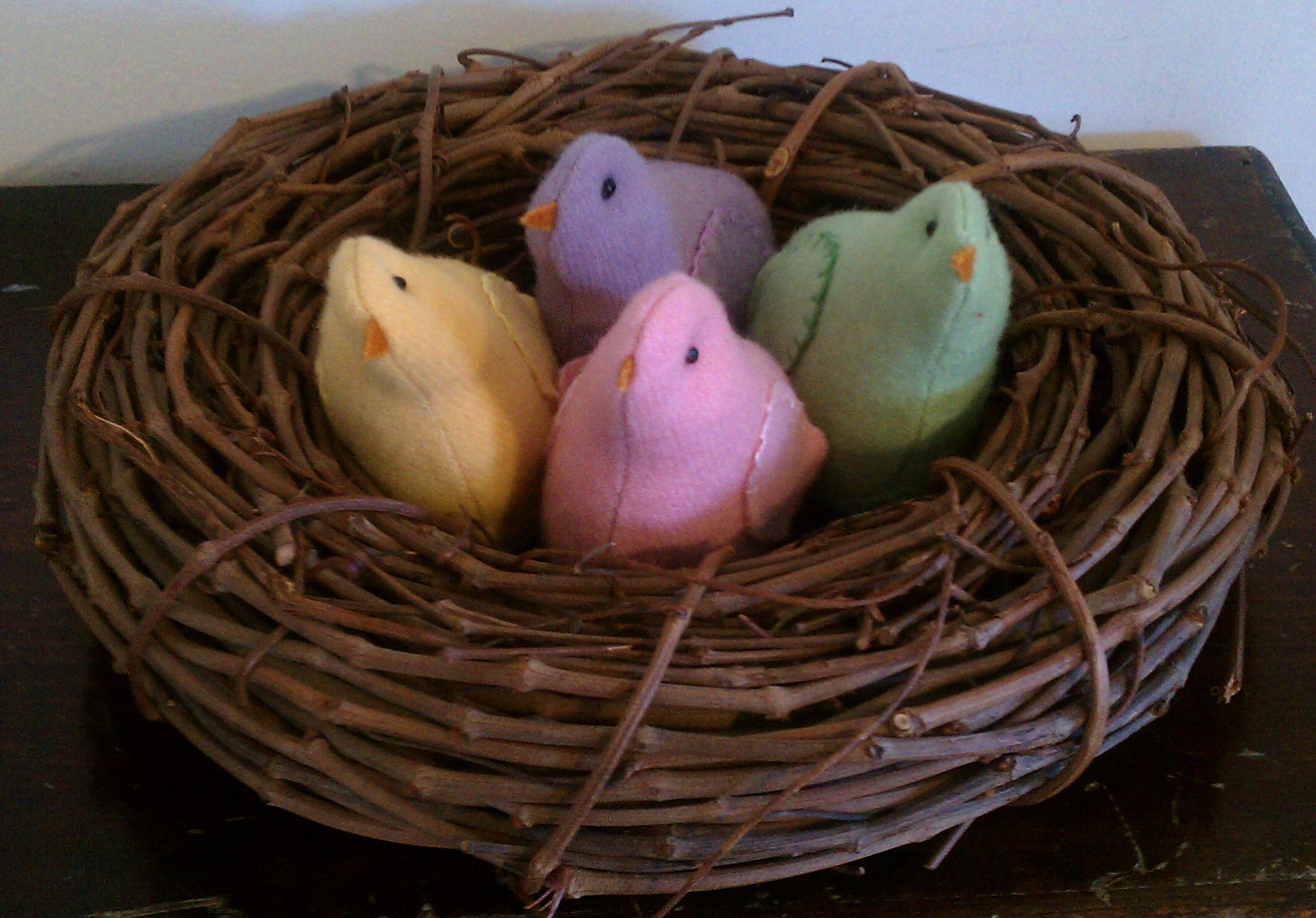
Nest of Easter Peeps

Here’s a cute spring project – a nest of Easter Peeps!  The original pattern from Liberty Rose was a much larger chick that could be used for a pincushion.  I downsized it and stitched it up in some yummy spring colors!  You could also make some cute Easter Rabbits and use brown floss to add in the distinctive Rabbit Peep face – 2 small dots for the eyes and one for the nose (note:  writing this on my to do list).

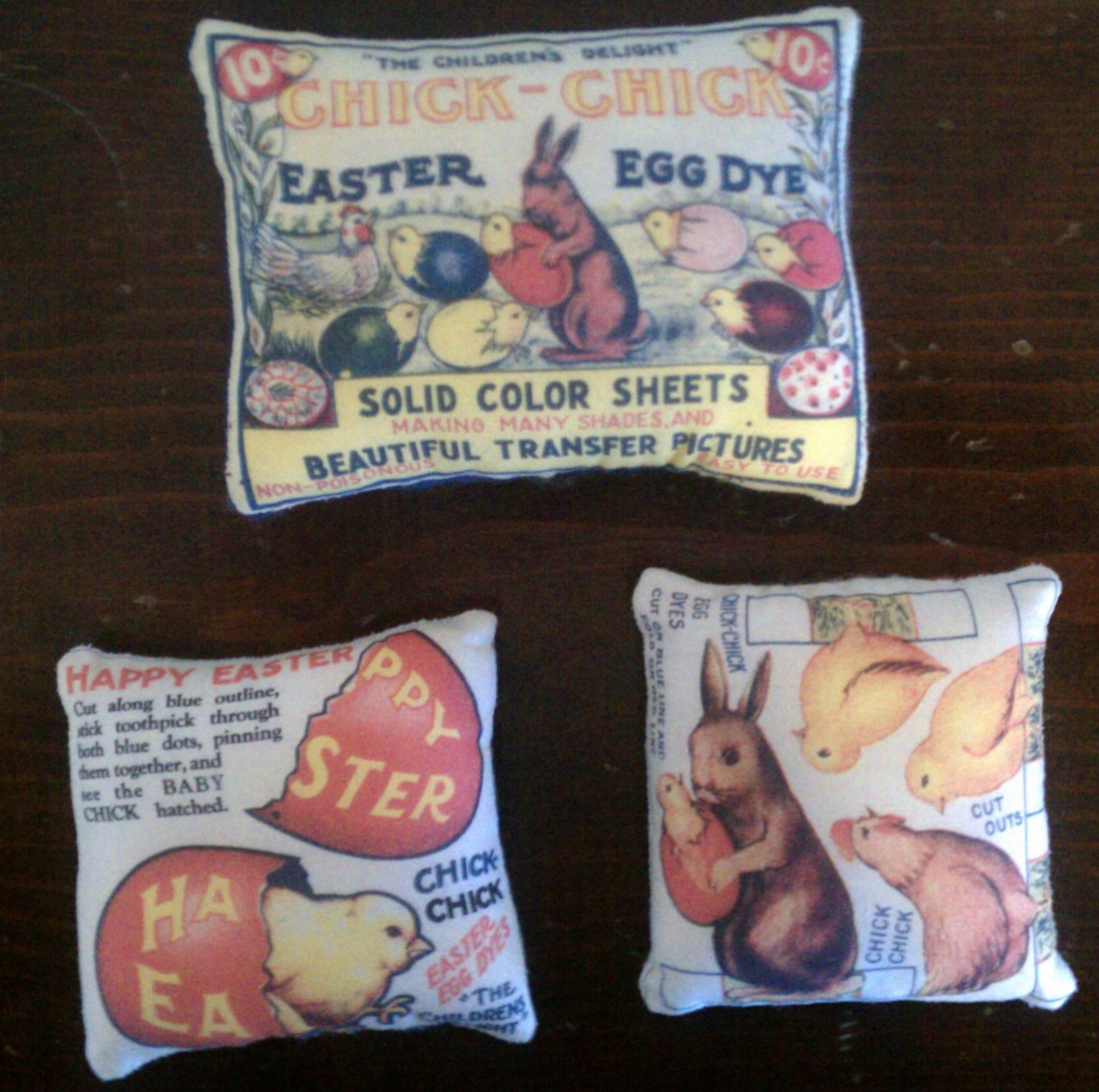
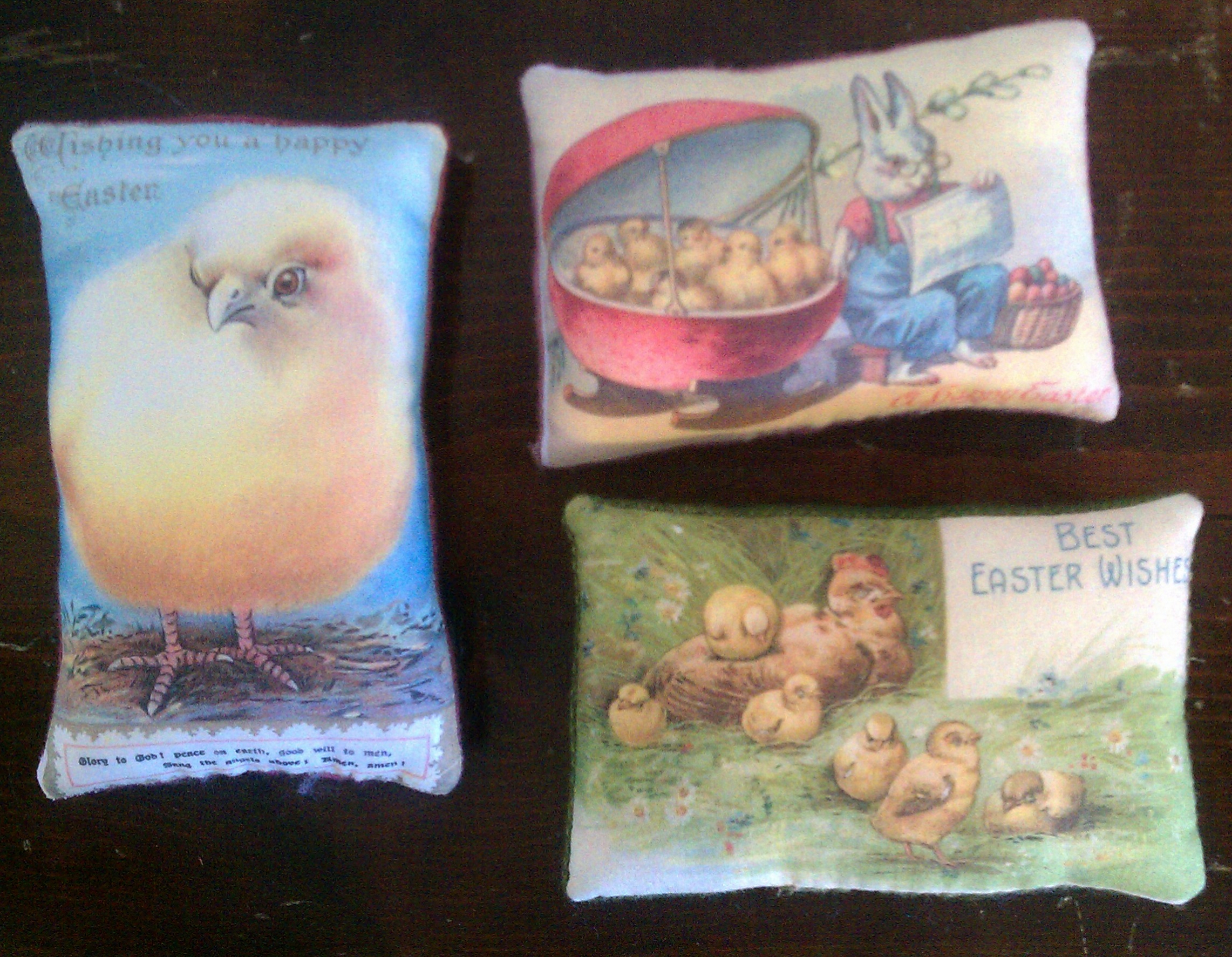
Easter Pillows - Photo Transfers

This spring pillows were also inspired by Liberty Rose!  These are really easy to stitch up and are great accents for your spring decorating.  Pick out a few vintage images (we used postcards) and then transfer them to fabric.  You can buy the photo transfer fabric at Jo-Ann’s (bring your coupon).  Cut out, sew on a backing, and stuff – viola!  The neat thing about this is that you can use any image – there are lots of goods ones the internet, just do a search for “vintage ____ images”.

Easter Pillows - Photo Transfers

Happy spring and Keep It Thimble!